
The plane banked left, carving through clouds like a deliberate brushstroke. Below, the Himalayas rose from mist—ancient, unmoving, eternal. From my window seat, I caught flashes of snow-bright ridges, valleys tucked into folds of green, rivers coiling like threads of silver light. Somewhere ahead lay a monastery I’d only ever seen in photographs — one built into the side of a cliff, hidden among clouds. I didn’t know it yet, but it would become the final chapter of my journey — the destination that had been calling all along.
As the aircraft descended, it felt less like arrival and more like remembering. The pilot’s voice came through calm and assured: “We are beginning our approach into Paro.” Outside, the mountains pressed close. The descent curved between them like a whispered prayer—one of the world’s most daring landings, guided by faith and muscle memory in equal measure.
When the wheels touched the runway, the cabin exhaled. I had arrived in Bhutan—a place known as the Land of Happiness, where even the wind seemed to move with intention.
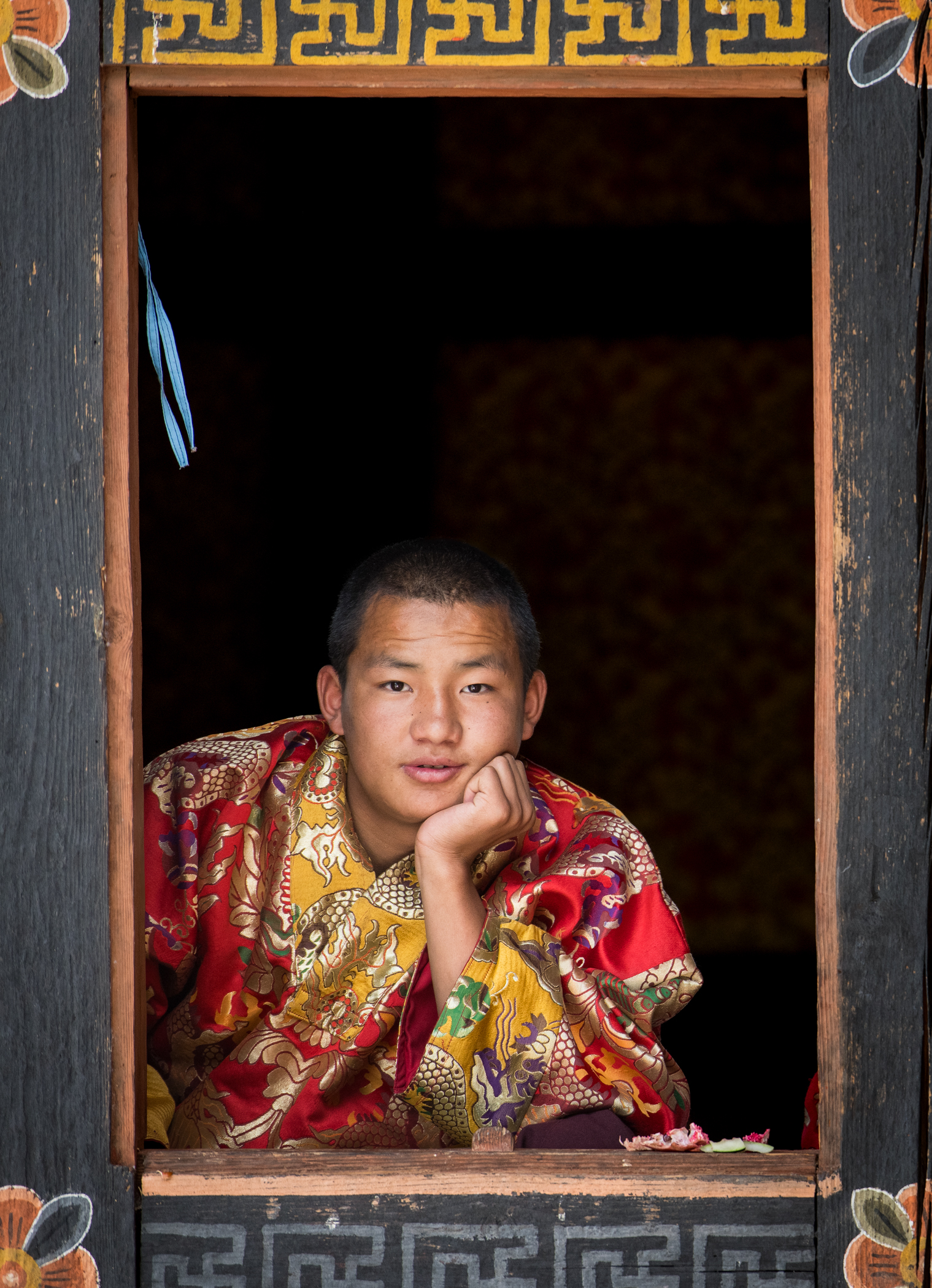
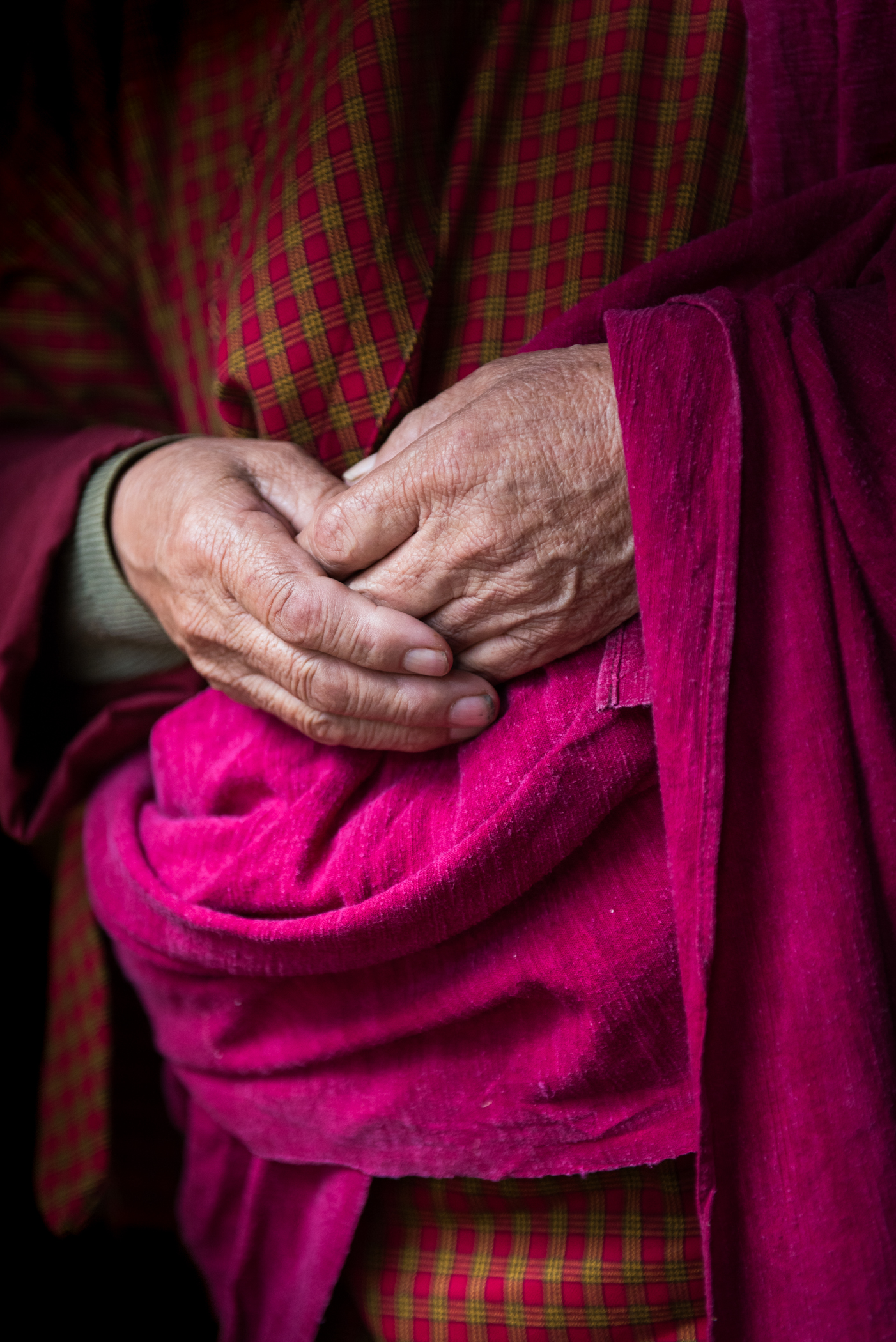
The airport itself felt like a first lesson. No chaos, no shouting, no rush—just quiet precision. The terminal looked more like a monastery than a point of transit: carved beams, painted dragons, polished wood that smelled faintly of cedar. Portraits of the King and Queen watched over the hall, their gaze calm and protective. Every detail spoke of order and grace.
Through the crowd, two figures stood waiting—steady, composed, holding a sign that read like an invitation to destiny:
Ron B. Wilson – Beyond the Clouds.
Tshering, my guide, stepped forward first—eyes bright with warmth, the kind of ease that makes strangers feel like old friends. Beside him stood Sonam, my driver, quiet and steady. Before we spoke, Tshering unfolded a white silk scarf. “Welcome to Bhutan,” he said, placing it gently around my neck.
The khata was cool against my skin, impossibly soft. “It’s for purity and compassion,” he explained. “To begin the journey with a clean heart.”
It wasn’t ceremony—it was sincerity woven in silk.
In that small gesture, I felt something stir—an unspoken lesson about service. Here, kindness wasn’t performed; it was embodied. It lived in movement, in attention, in the space between words.
I’d spent my life chasing that same ideal—first working in restaurants, where I learned to listen beyond words, and later behind a camera, where I discovered that truly seeing someone is its own act of service. For more than thirty years, photography has been my language of attention—offering presence, not perfection.
That calling had carried me from South America, where I now run a small bed and breakfast on the Peruvian coast, to schools and villages across Asia and Africa—places where kindness is currency and grace is found in the act of showing up. My most recent work in Nepal had been with First Steps Himalaya, a grassroots education organization founded by Fionna and Durga. Their sister venture, Beyond the Clouds, is how I came to Bhutan. Fionna had once told me, “This isn’t a trip. It’s a transformation.” She was right.
We left Paro late in the morning, following the river east. The road curled beside water that caught the sun like glass. Villages appeared and disappeared among the hills: whitewashed homes, crimson window frames, smoke rising from kitchen fires.

The prayer flags rippled in five colors — blue, white, red, green, yellow — each one an element, each one a prayer. Sky, wind, fire, water, earth — harmony made visible.
Sonam drove with the calm focus of someone who understood the road’s rhythm. Tshering turned slightly in his seat, watching the mountains. “In Bhutan,” he said, “we believe everything must move in balance—mind, body, earth, spirit.”
The air smelled clean—pine and cool stone after rain. Each bend revealed another valley, another glimpse of stillness made real.
In Thimphu, the capital, there were no traffic lights. At the city’s busiest intersection, a white-gloved officer guided cars with movements so fluid they resembled a slow dance. Even the city’s rush had grace.
That night, from the hotel balcony, I looked out over the valley: a constellation of lamps and temples, the hush between raindrops. The khata lay folded on the chair beside me, its fabric holding the faint scent of cedar and incense.
In Bhutan, I was learning, service wasn’t something you performed—it was a way of being. I’d come to photograph this country, yes. But perhaps, more truthfully, I’d come to learn from it.
The next morning, the sound of drums rolled through Thimphu like distant thunder. It was steady, deliberate — not a performance but a pulse. Tshering smiled. “The festival begins,” he said. “You’ll want to be early.”
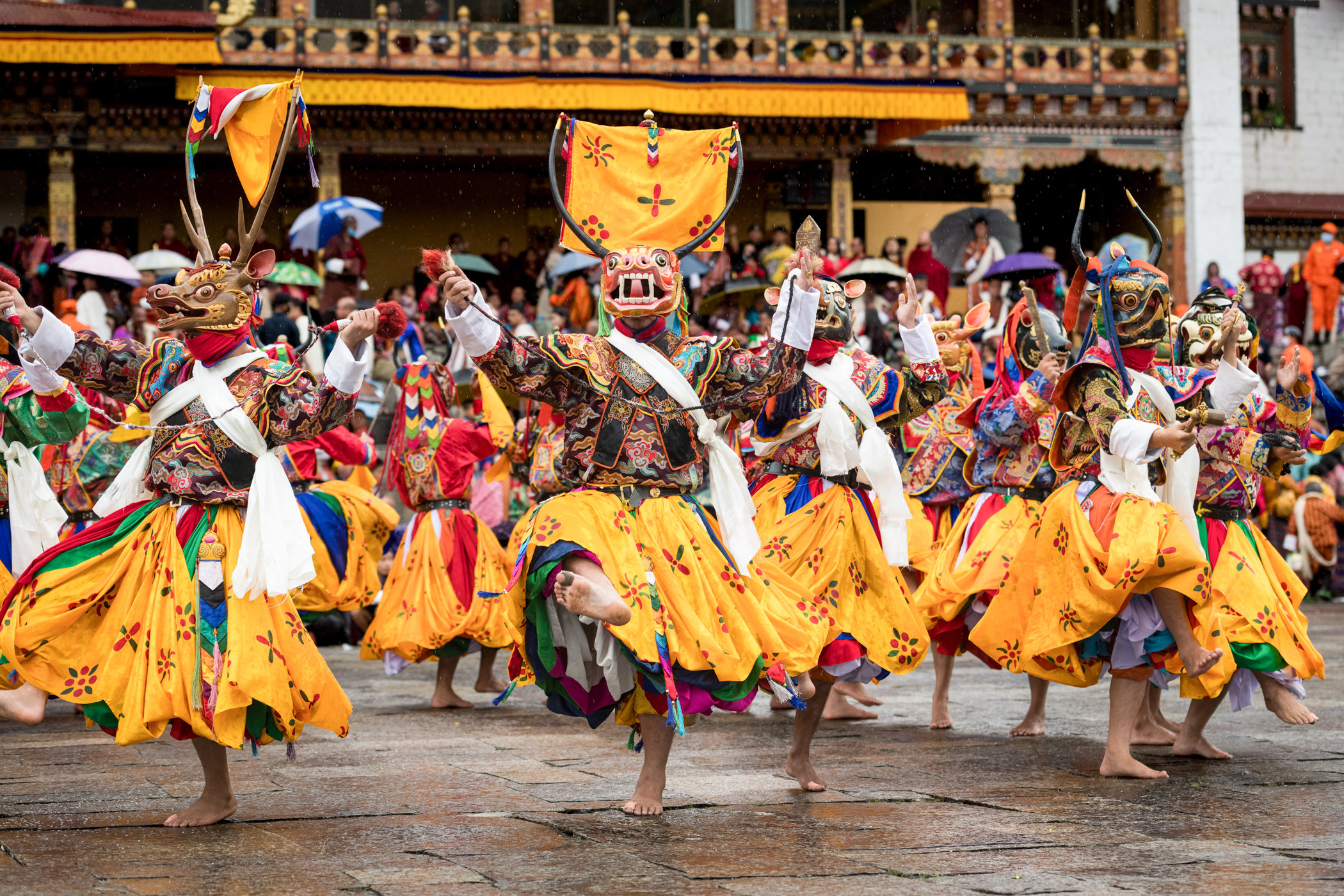
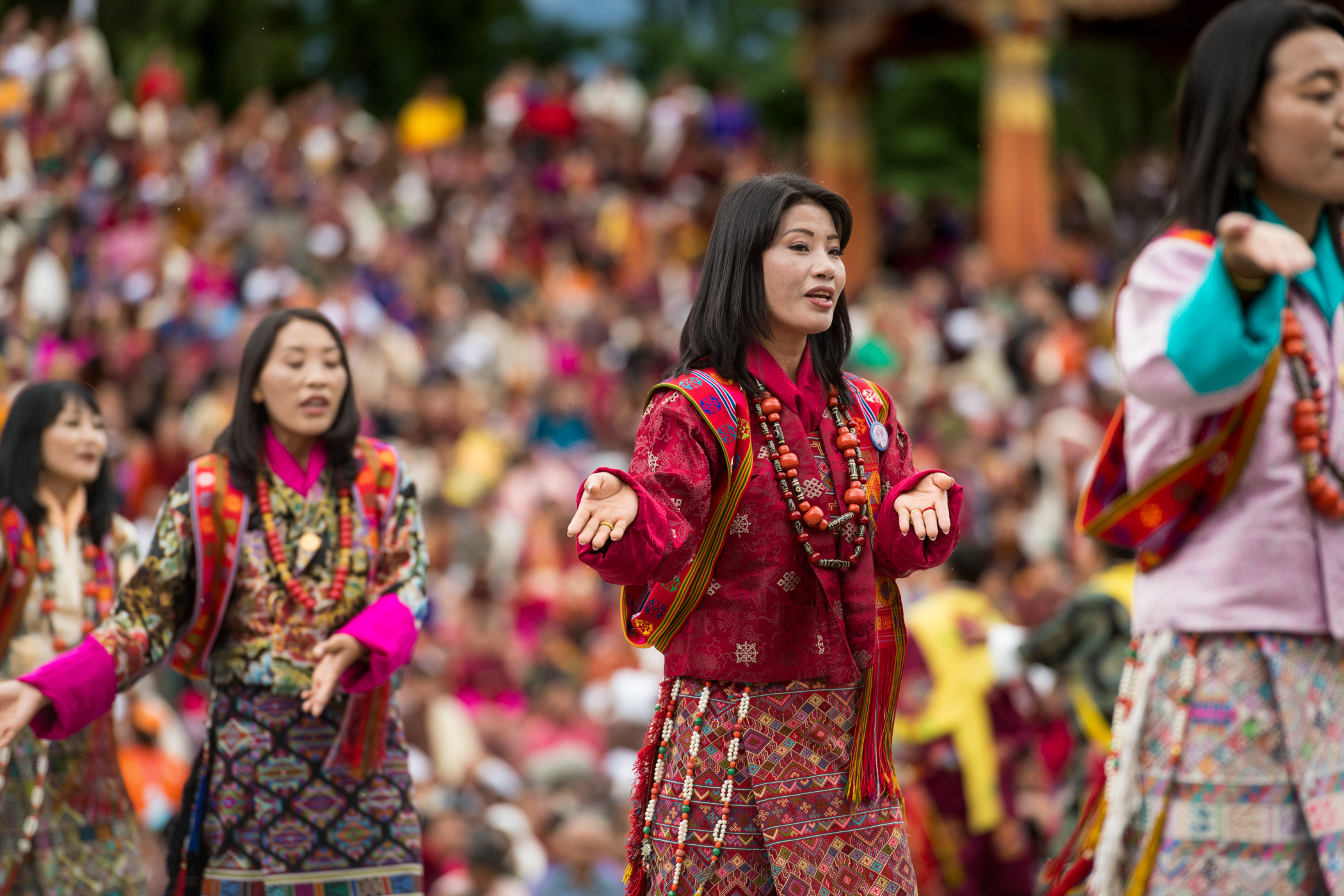

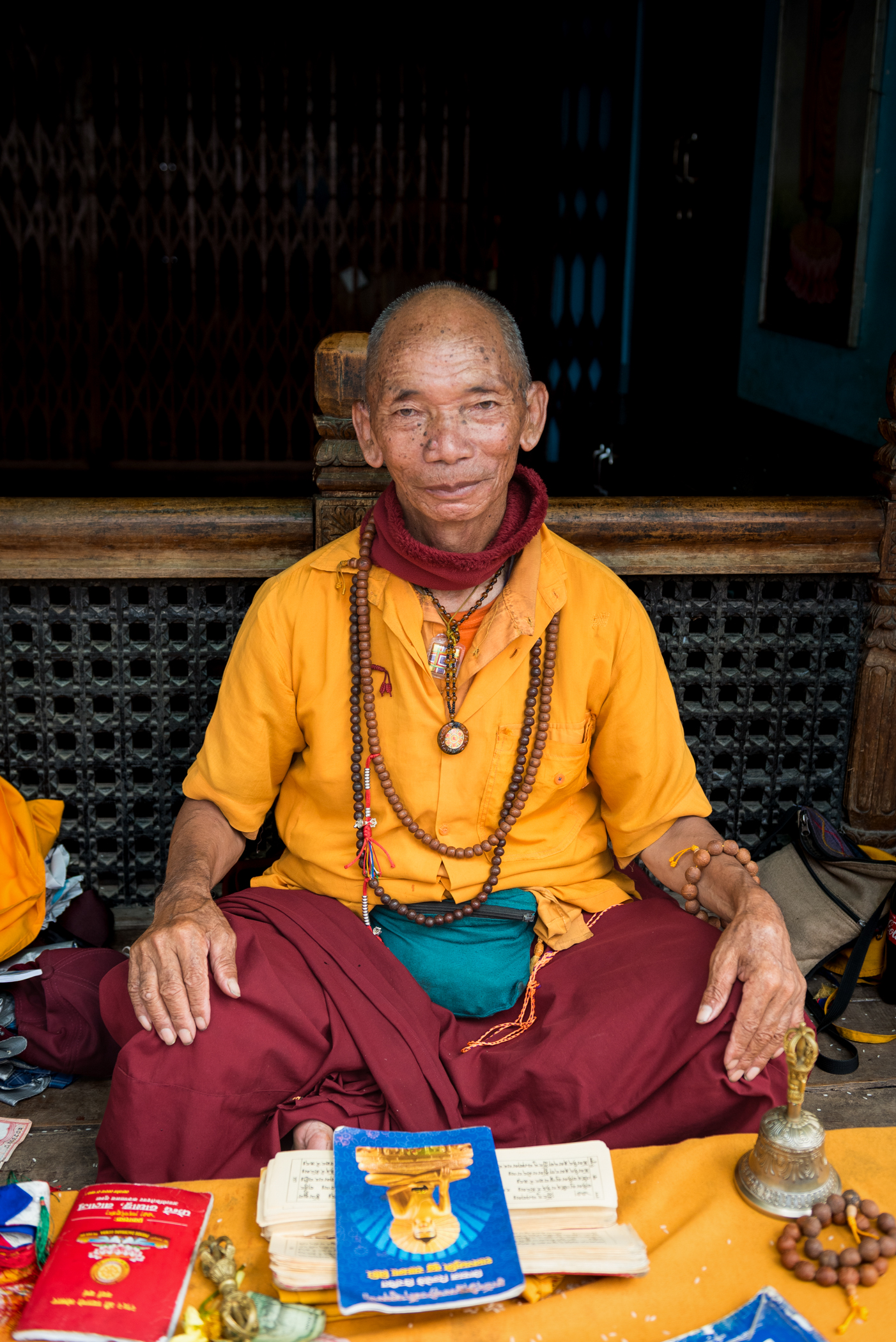
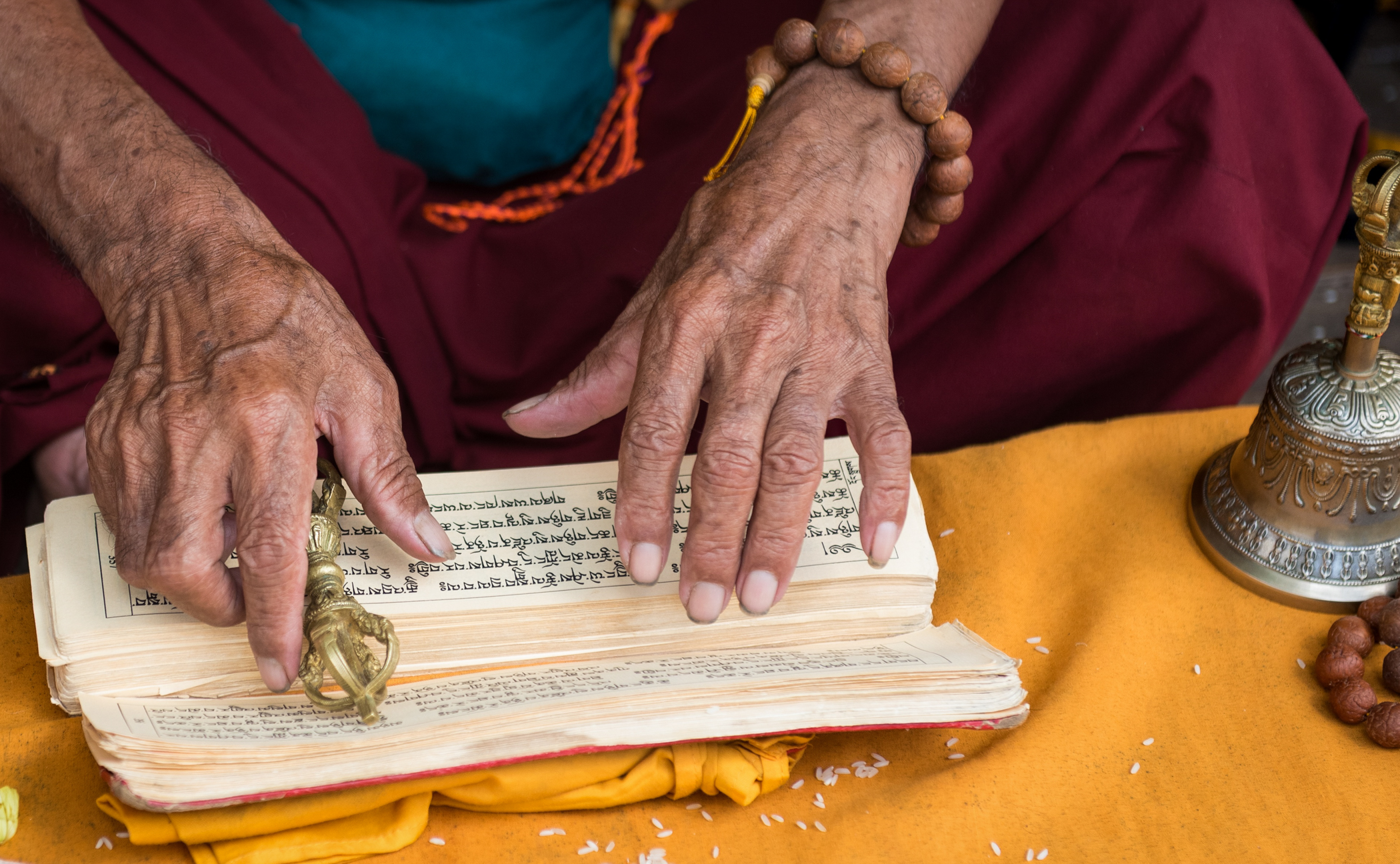
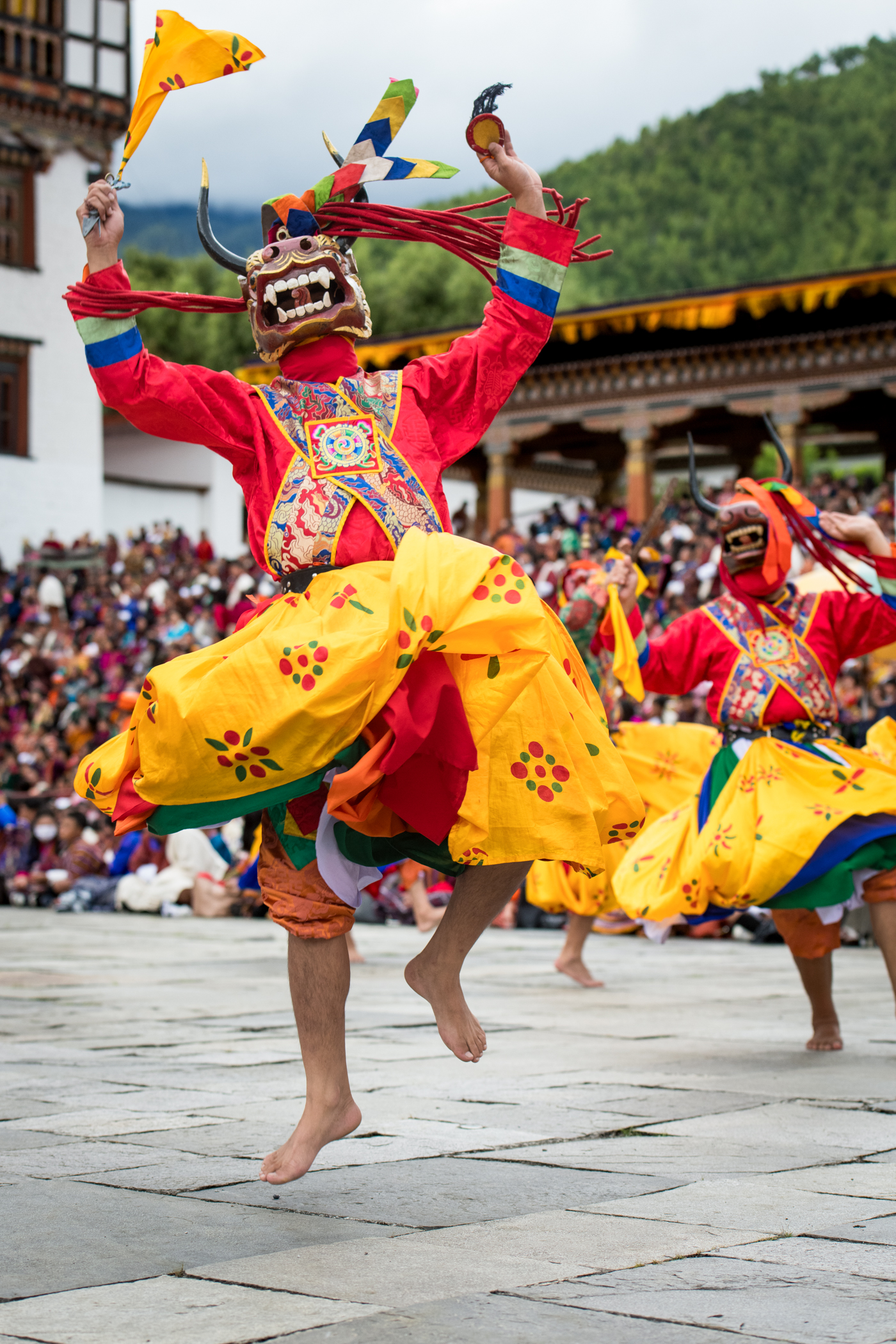
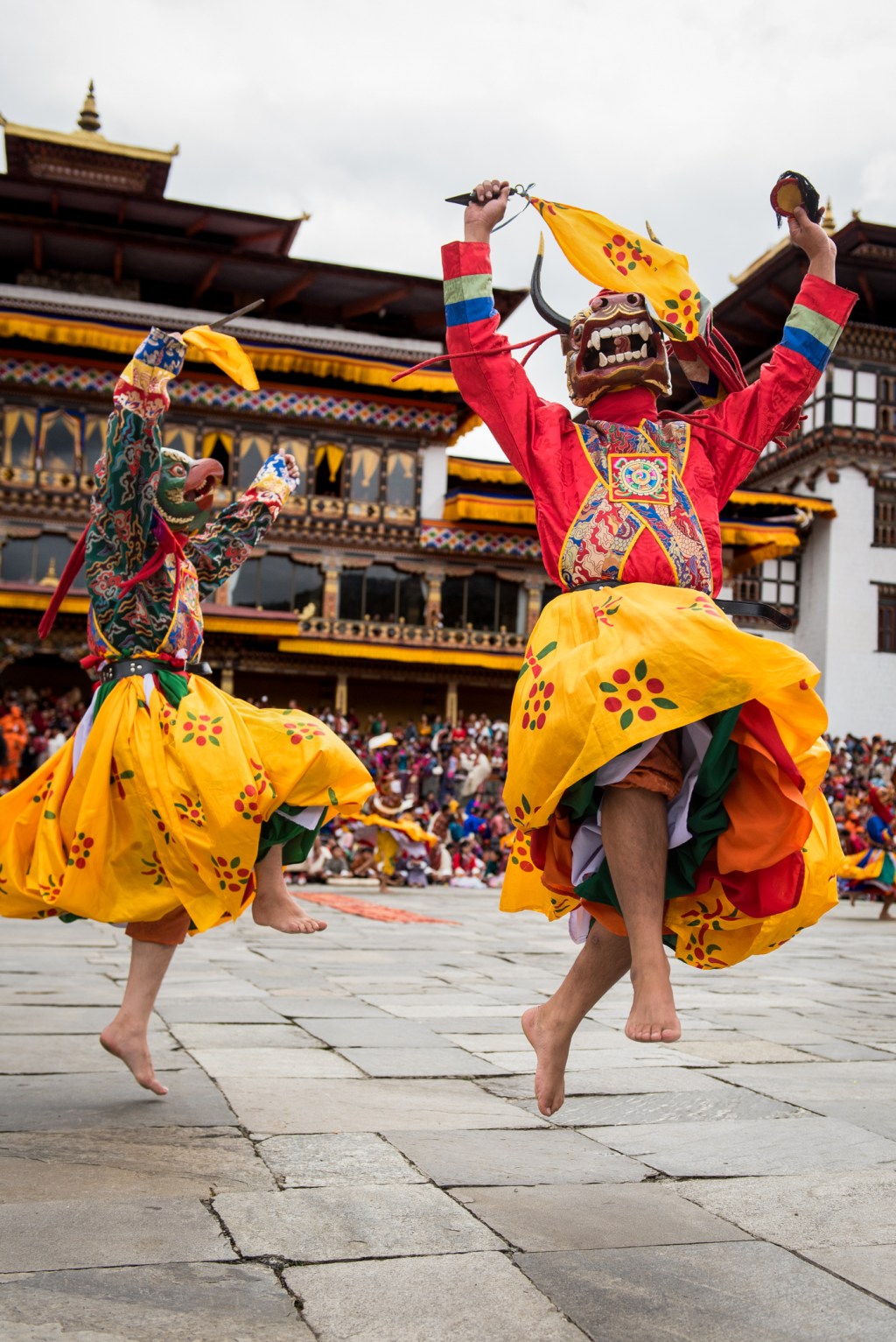
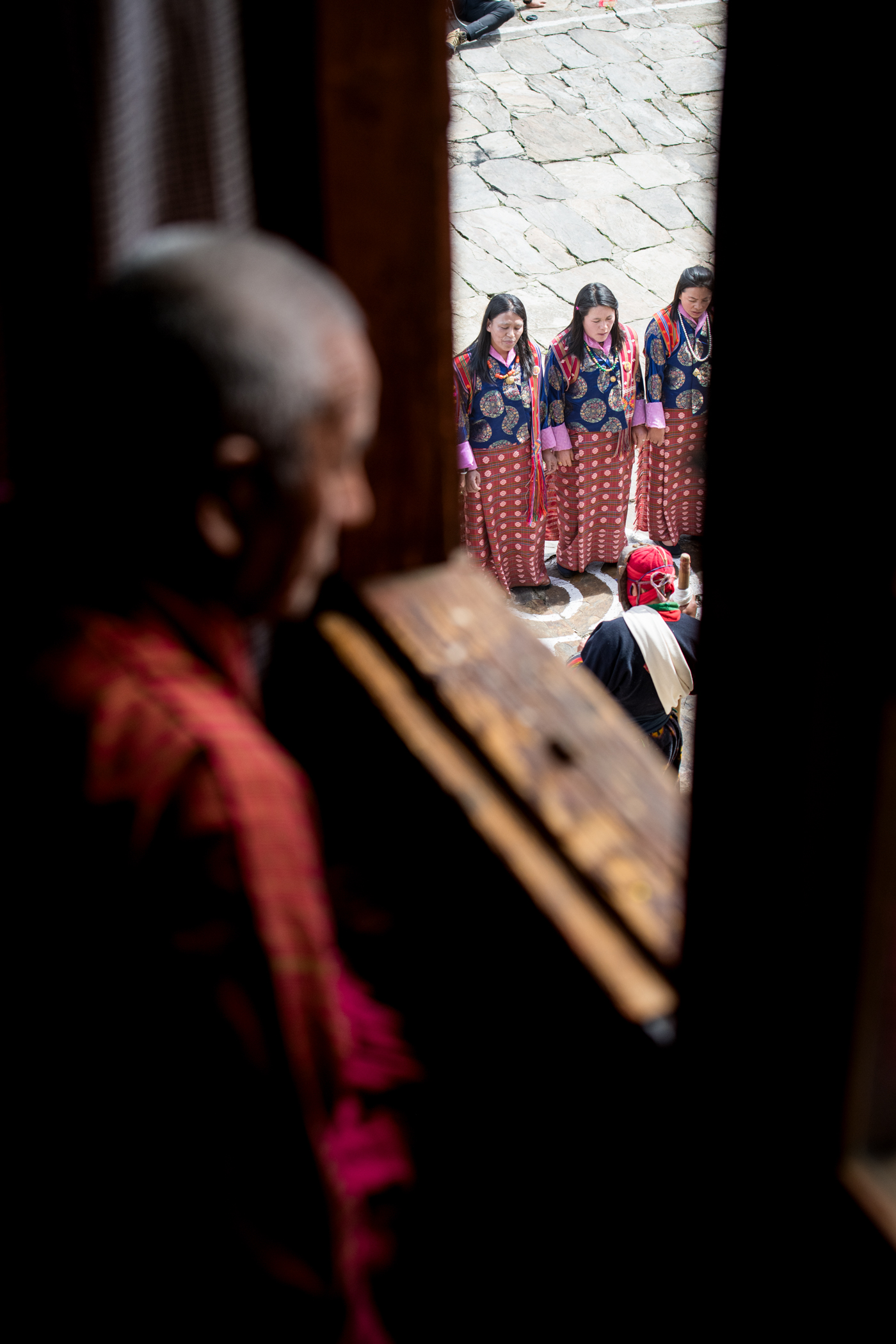
The Thimphu Tshechu is one of Bhutan’s grandest festivals — a tapestry of color, faith, and movement that turns the capital into a living temple. For three days, thousands gather to honor Guru Rinpoche, the saint who brought Buddhism to Bhutan. Every movement, every mask, every rhythm is an offering — a way of renewing the nation’s collective soul.
Through Beyond the Clouds, we were given rare access behind the scenes — a privilege that felt more like a responsibility, a quiet window into something few outsiders ever see.
In a small, crowded room behind the main courtyard, the dancers prepared in near silence. Silk robes hung from wooden beams, the scent of incense mingled with sweat and dye. Wooden masks lined the walls like ancient witnesses.
One performer stood near the back, his mask cradled gently in both hands — red and gold, fierce yet tender. A single bulb flickered above, casting a soft, uneven light across his face. His eyes closed briefly, his breath slowed, as if waiting for something not seen but deeply felt. Then, in that stillness, I raised my camera and took the frame.
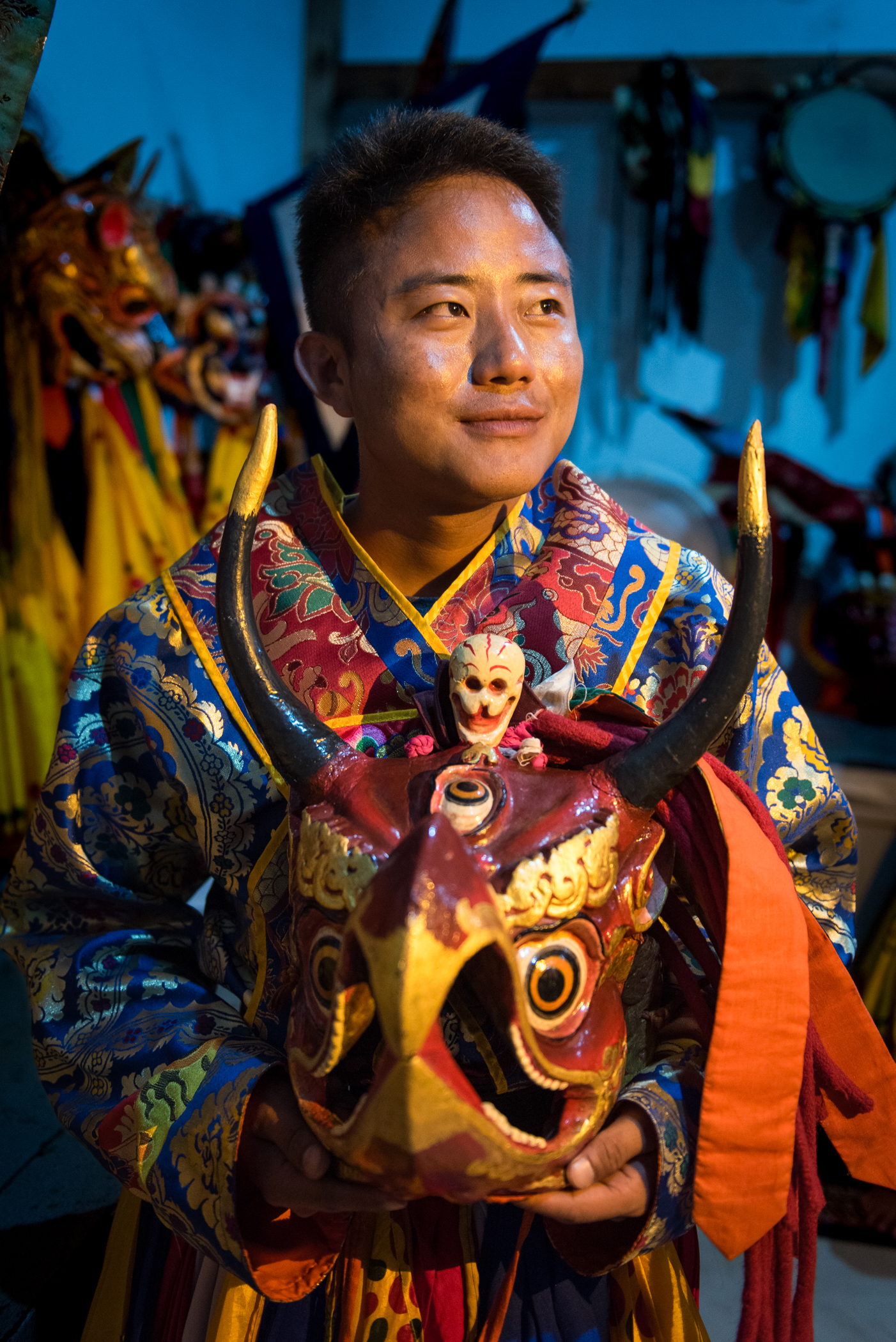
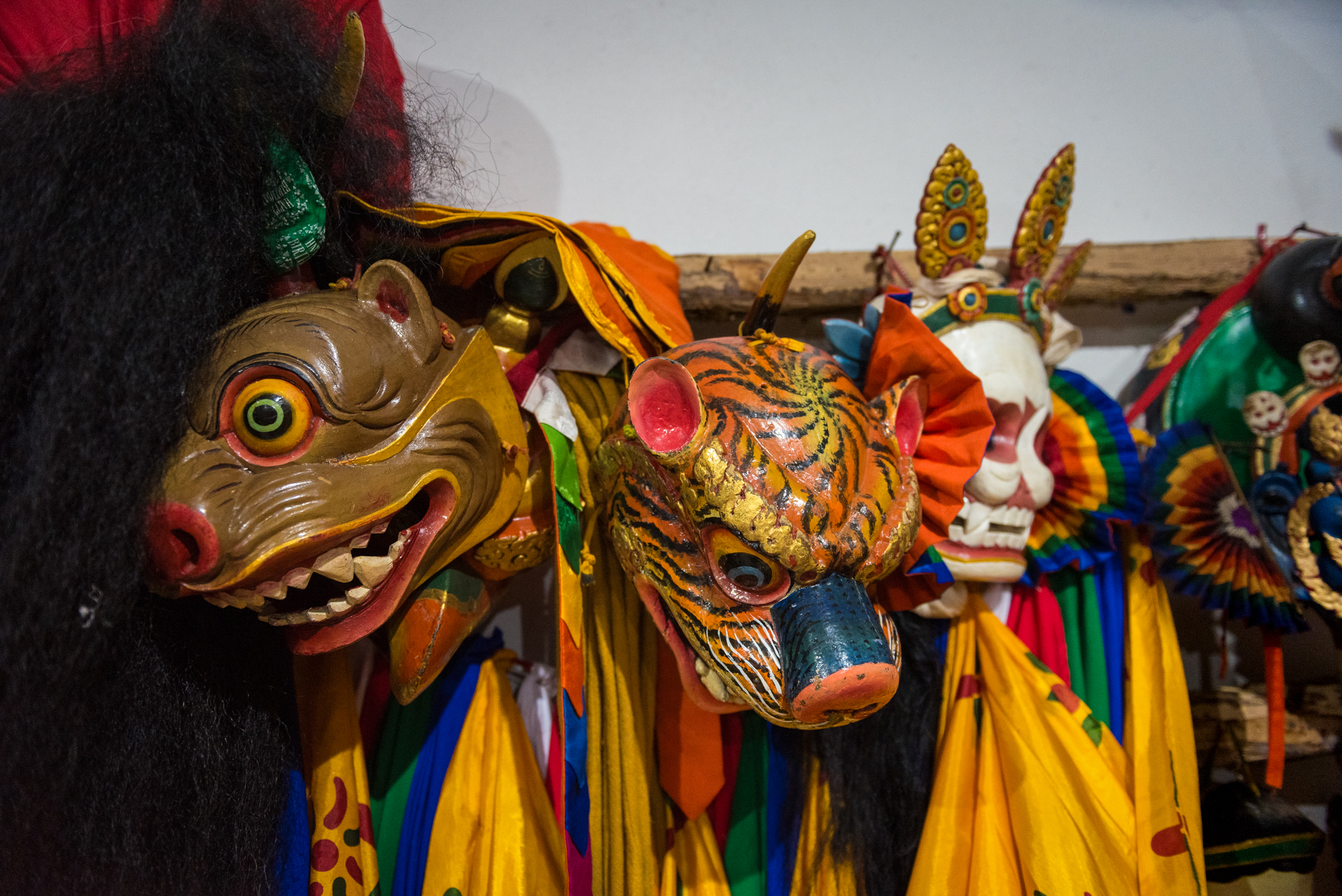
He was no longer just a man in costume. He was becoming something sacred — poised to step from shadow into story, carrying centuries of devotion into the light.
Moments later, the courtyard erupted in sound. Drums boomed. Long horns roared. Conch shells cut through the air like lightning. The first wave of dancers swept into the square — robes flashing red, yellow, and blue, masks spinning with fierce precision. The rhythm was relentless. Every step struck the stone with conviction. These weren’t performances for applause; they were prayers in motion, blessings to be seen, felt, and carried.
I moved with the crowd, camera in hand, trying to keep pace with the unfolding energy. Families sat shoulder to shoulder along the monastery walls. Elderly women whispered mantras under their breath, their prayer beads slipping through fingers polished by time. Children clapped and laughed, their eyes wide with awe.
From my higher vantage, I captured the vastness of the moment — the swirl of color and sound below, the ripples of devotion spreading outward. Then I lowered my lens and simply watched. There are times when photographing feels too small for what’s in front of you.
At one point, I saw a grandmother holding her granddaughter on her lap, both perfectly still, their eyes fixed on the dancers. The child’s hands rested in her lap, folded in prayer. In that instant, the generations blurred — old and young, memory and promise — each reflecting the other.
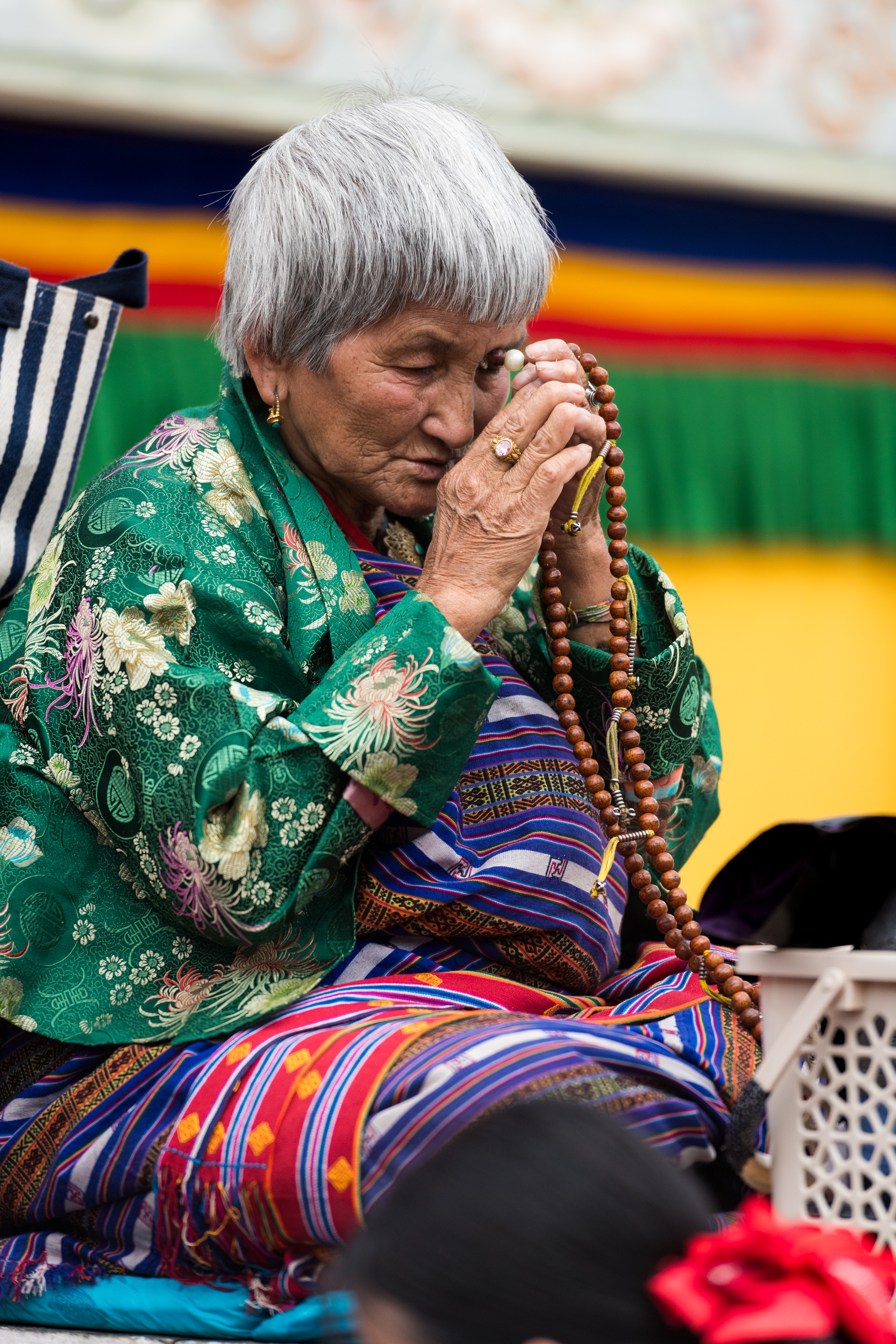

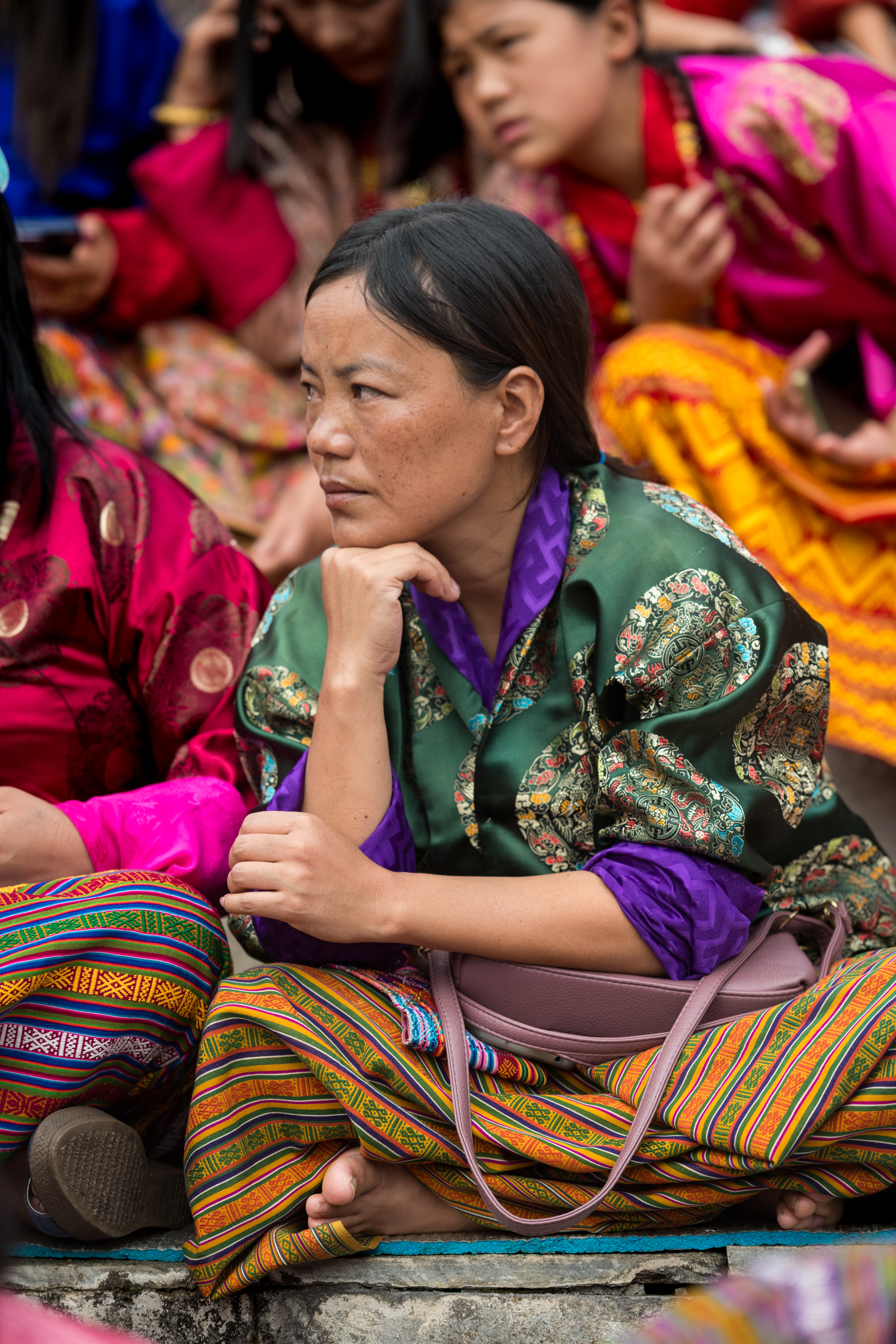

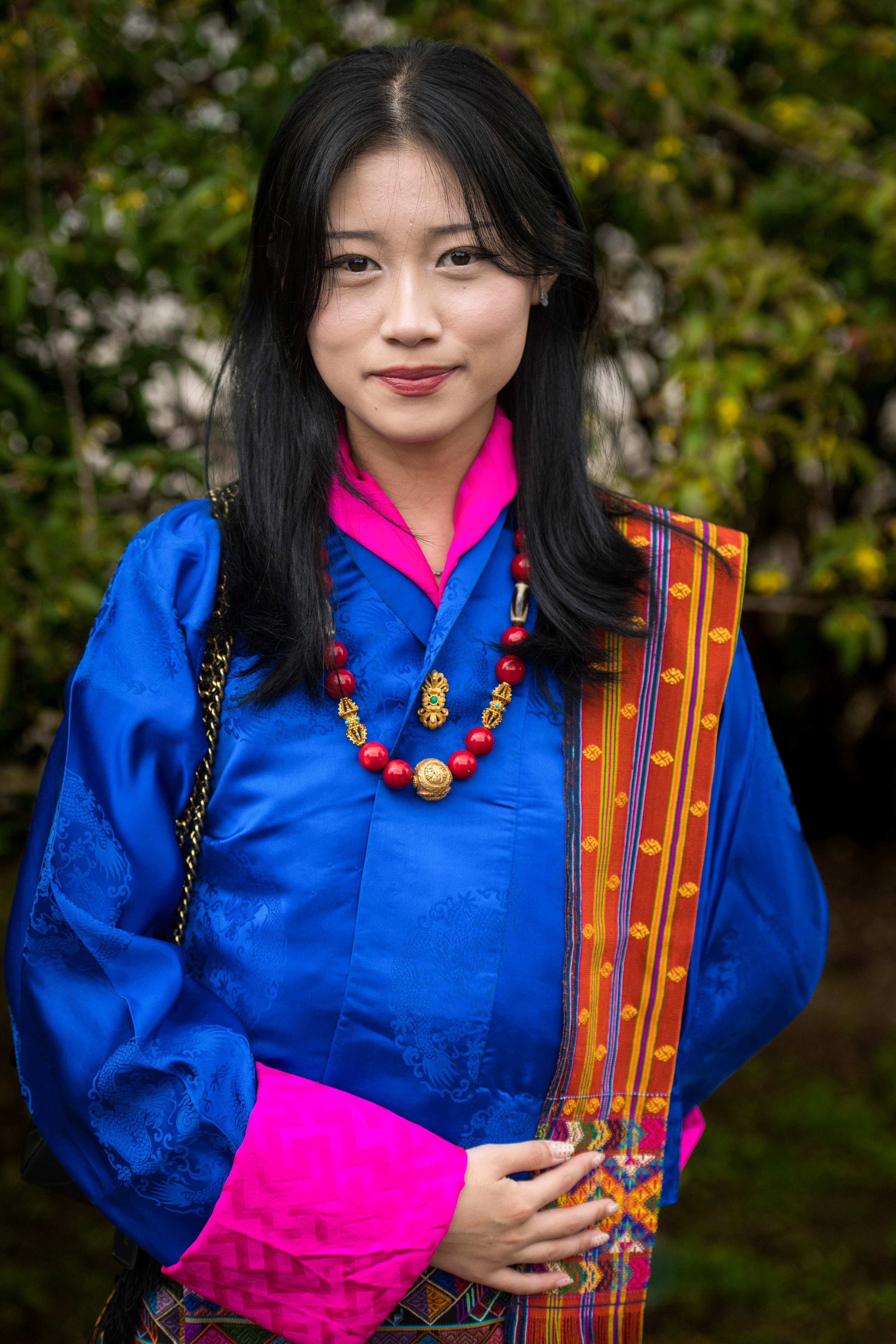
By late afternoon, the sky turned soft and gray. A drizzle began, turning the dancers’ robes darker and more luminous at once. Around the courtyard, the crowd shimmered in its own palette of color — men in their finest ghos, women draped in silk kiras, jewelry glinting beneath the soft rain. It was as if the entire nation had dressed to honor the moment itself. The air smelled of rain and incense. The drums carried on, unfazed, echoing through the valley.
When the last horn sounded, the crowd stood in silence, drenched but smiling. Tshering turned to me and said quietly, “We believe that when we dance, the gods are reminded to keep watching.”
He was right. In Bhutan, the past isn’t behind you — it breathes through you.
The following morning, before leaving Thimphu, Tshering wanted to take me somewhere special. “Before we go,” he said, “you should meet our Buddha.”
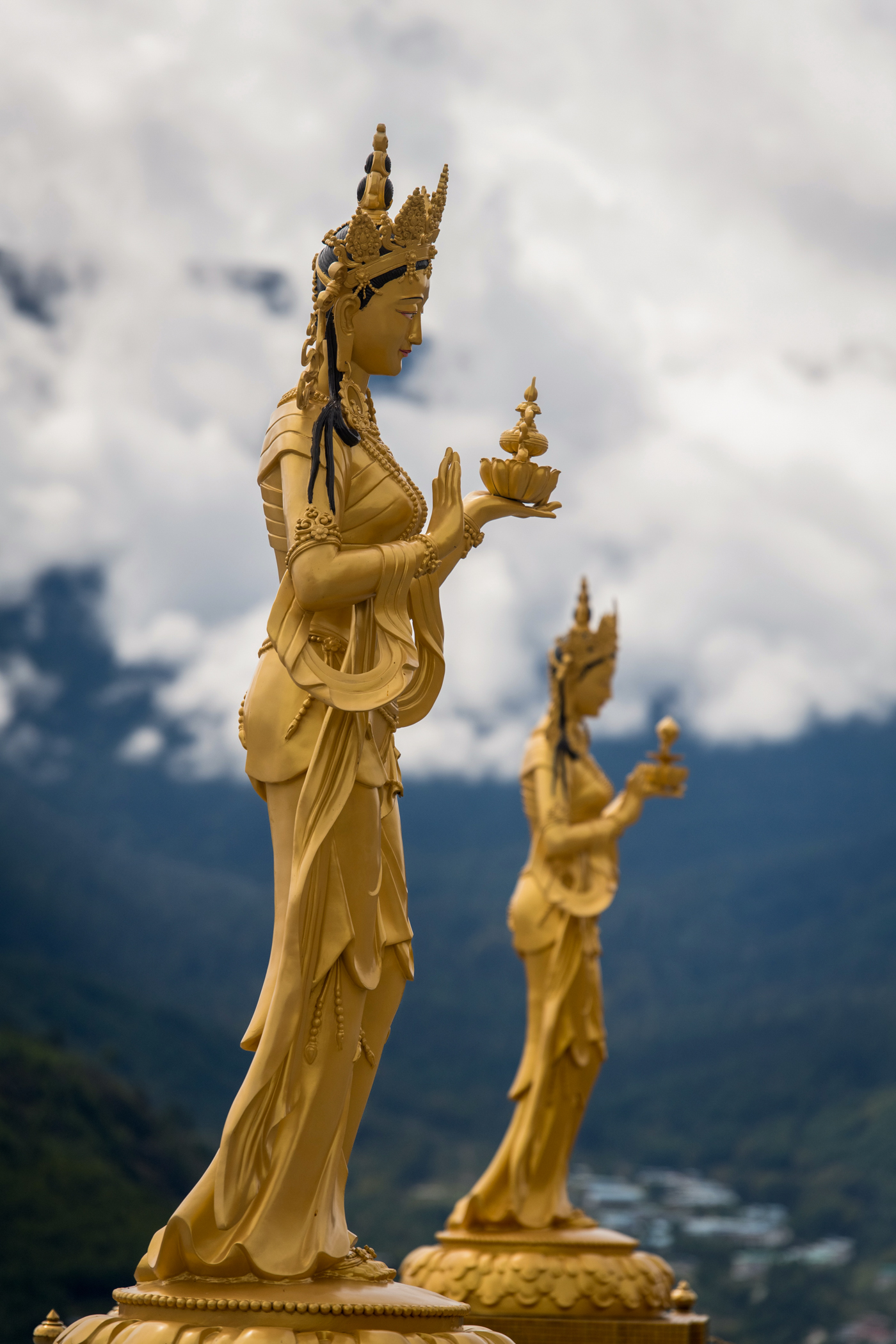
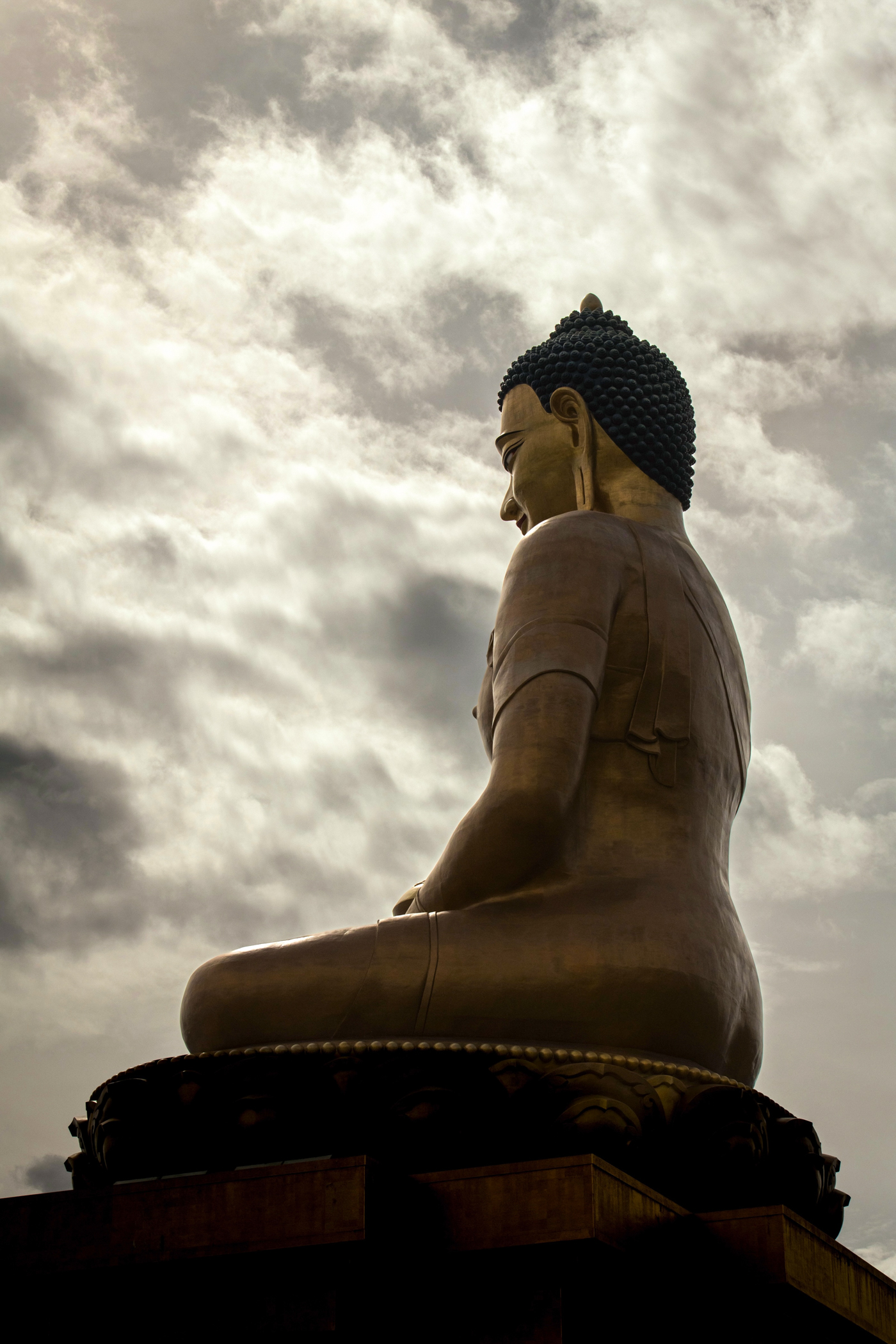
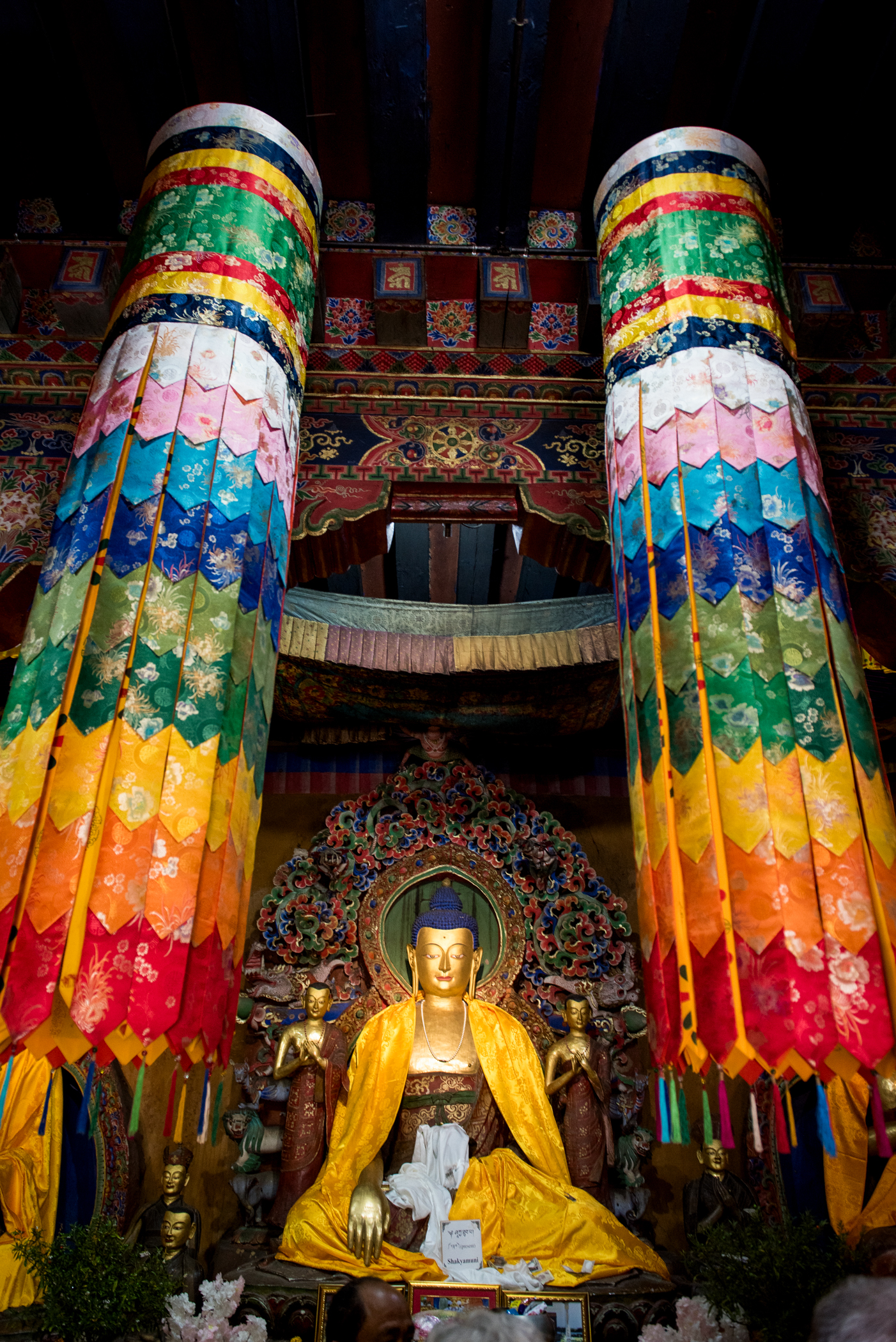
We drove up winding mountain roads to the Buddha Dordenma Statue, one of the largest seated Buddha statues in the world. At 169 feet tall, it overlooks the southern entrance to the Thimphu Valley, gleaming gold against a shifting sky. The statue sits on the site of the old Kuensel Phodrang Palace, now long gone — replaced by this monumental presence that feels both ancient and impossibly modern.

Standing before it, I felt the scale not just in height, but in stillness. Beneath the statue, within its base, thousands of smaller Buddha figures rest inside chambers — one for every act of compassion, or so the legend says.
Tshering began to speak softly, his voice steady and sure. He told stories of Shakyamuni Buddha, of Bhutan’s kings, of balance and rebirth. When he finished, he looked out toward the valley and smiled. “Tomorrow,” he said, “you’ll learn more about that.”
That became his quiet refrain throughout the journey. Each lesson left slightly unfinished — like the closing line of a prayer meant to be continued by the next sunrise.
The next day, we left Thimphu and began climbing toward Dochula Pass. The road wound through forests of pine and rhododendron, the air growing thinner, cooler. At the summit stood 108 white chortens, gleaming in the mist — monuments to soldiers who had given their lives for Bhutan.
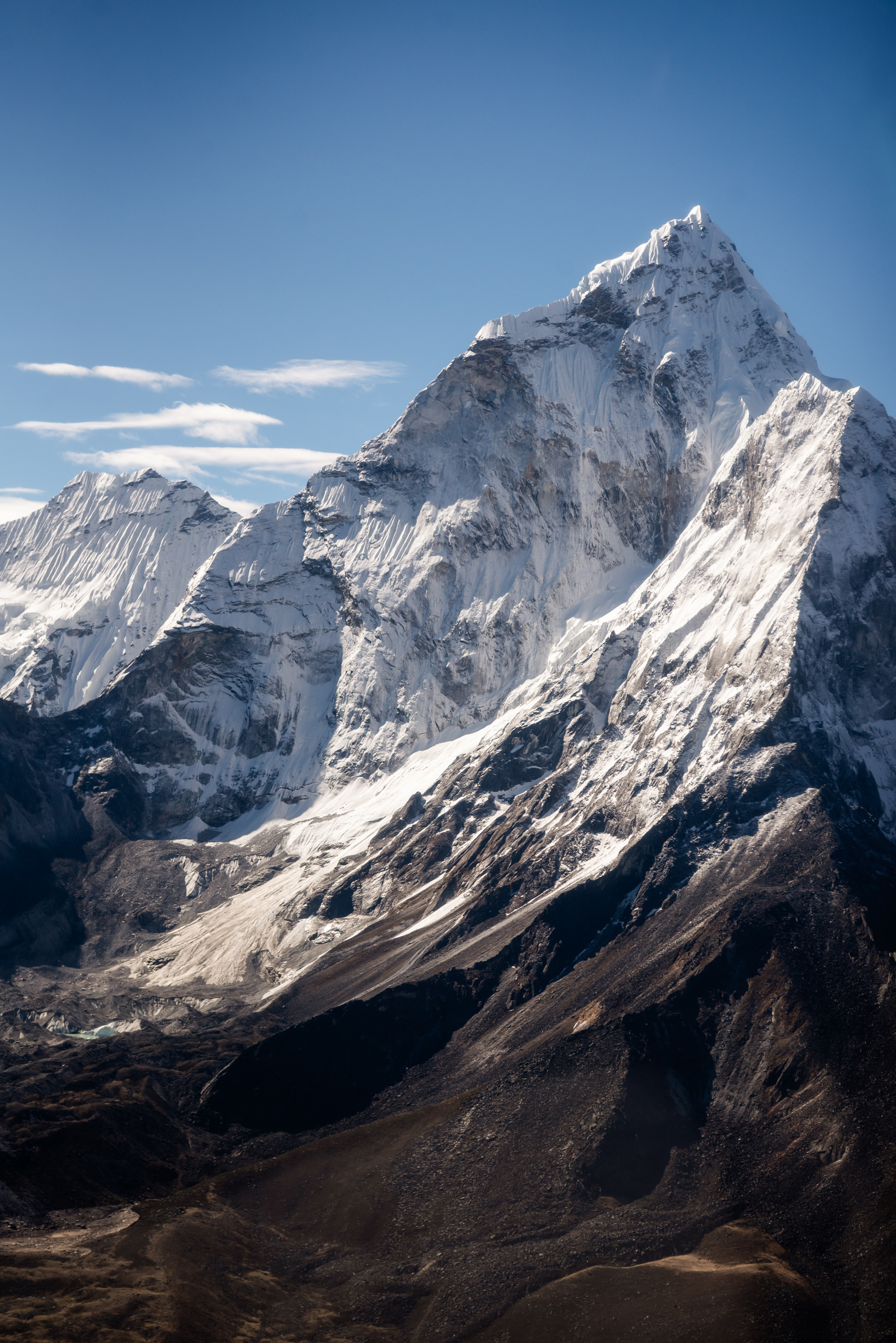
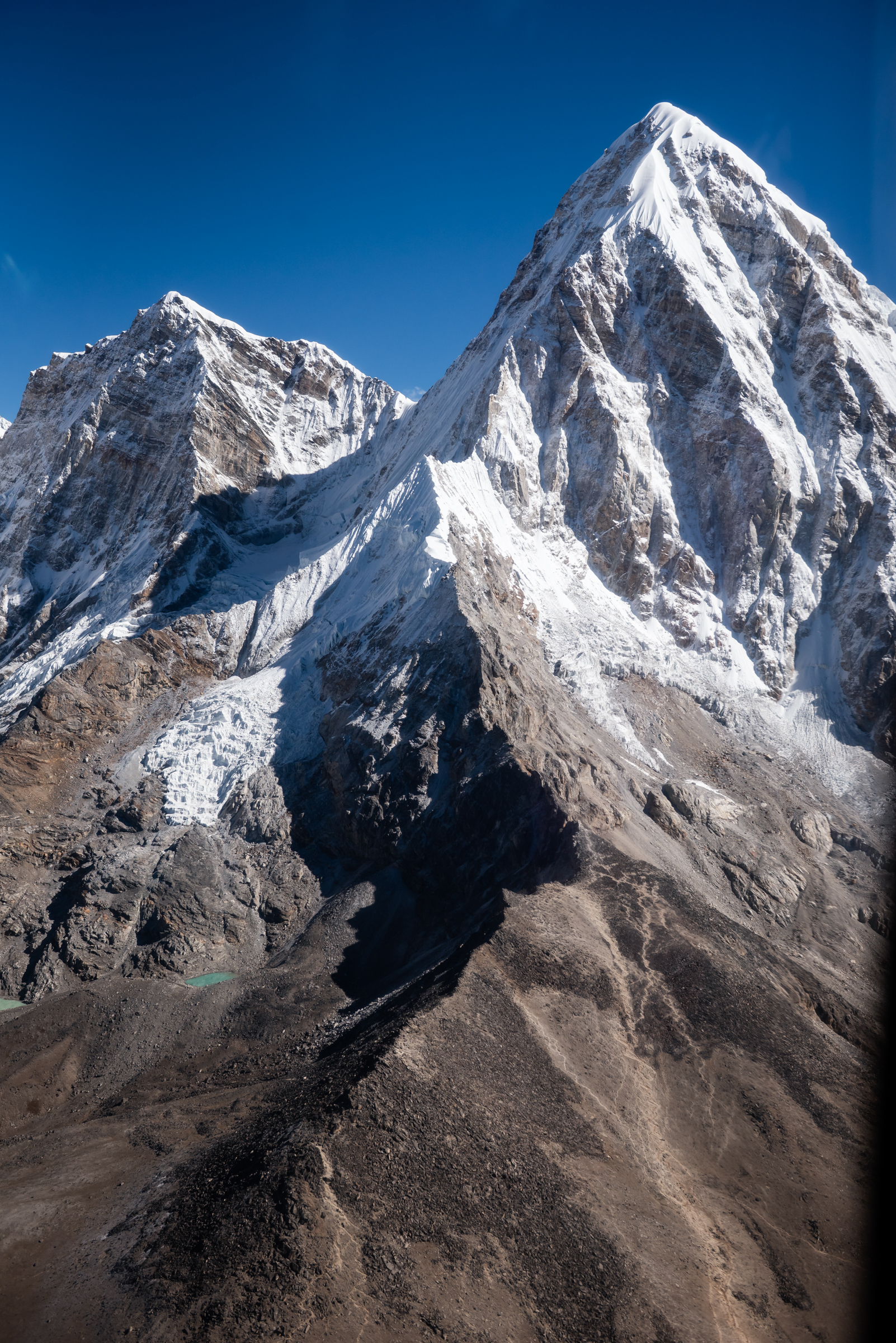
Tshering pointed toward the horizon. “On clear days,” he said, “you can see the Himalayas.”
We waited. The fog began to shift, then break apart. Slowly, the peaks revealed themselves — vast, untouched, eternal. I didn’t lift my camera right away. Some moments don’t need to be taken; they need to be kept.
From there, the road dropped into the Punakha Valley — a place so lush it felt painted. Terraces of rice paddies stepped down the hillsides like green waves. The air was rich with the scent of earth after rain.
We stopped at Chimi Lhakhang, the Temple of Fertility, dedicated to the Divine Madman, Drukpa Kunley. The walls were alive with color and symbols — dragons, flames, and phallic emblems that told their own story of faith and freedom. Though the doorway was quiet the day I visited, it’s said that at other times a monk stands there, blessing visitors with a carved wooden phallus wrapped in silk. It would be easy for an outsider to misunderstand, but here it isn’t vulgarity — it’s vitality. The sacred and the playful live side by side.
As we walked back down the hill, a light rain began to fall, turning the dirt path into ribbons of ochre. In Bhutan, even the rain feels intentional.
The rain eased as we entered the valley, the sky parting just enough for sunlight to spill across the fields. The sudden warmth felt like a blessing. Ahead, Punakha Dzong rose from the confluence of two rivers—the Pho Chu and Mo Chu—a palace of whitewashed walls and carved crimson balconies glowing against the wet earth. Known as the Palace of Great Bliss, it has stood for centuries as the spiritual heart of Bhutan, where the first king was crowned and where the monastic body still winters.
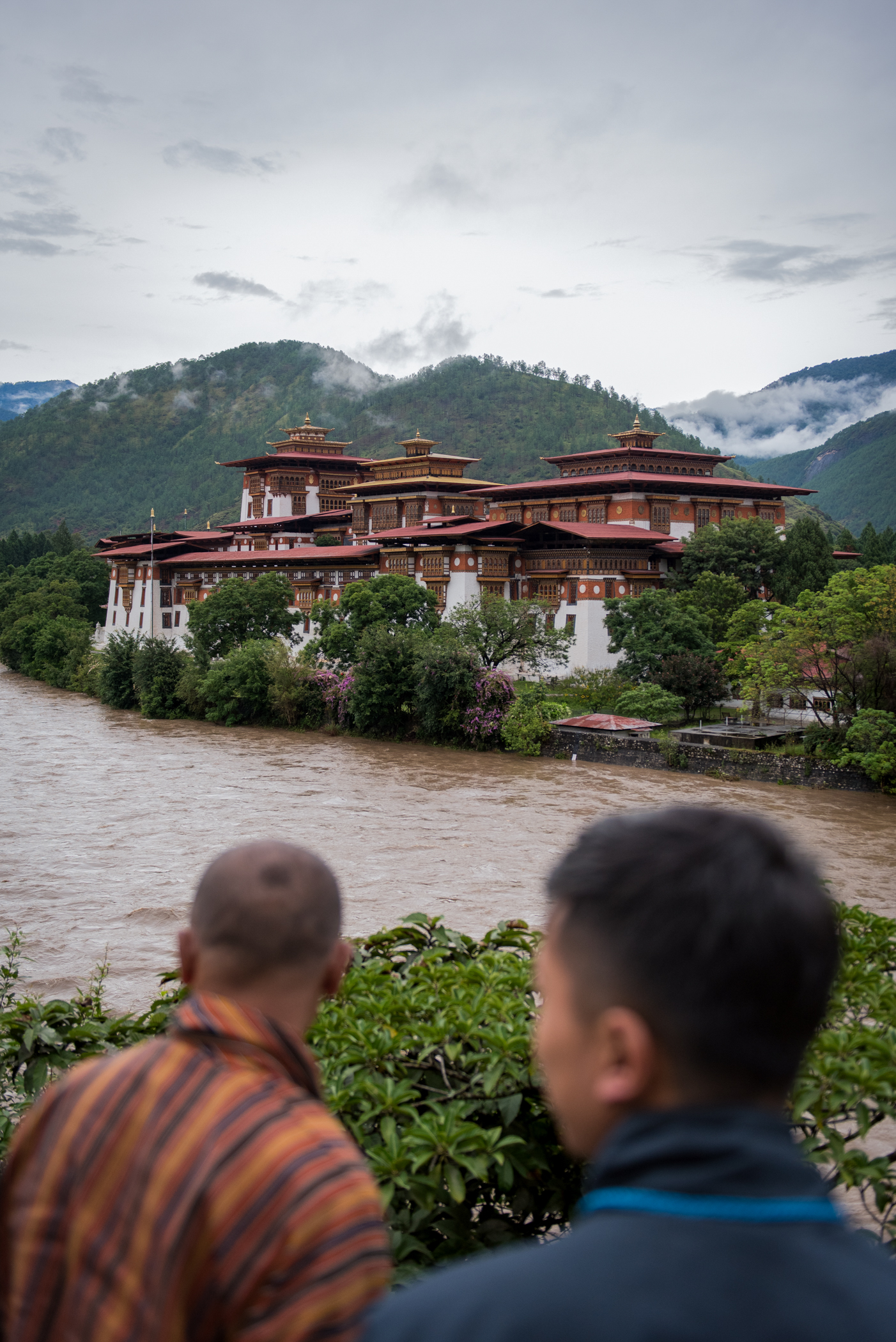
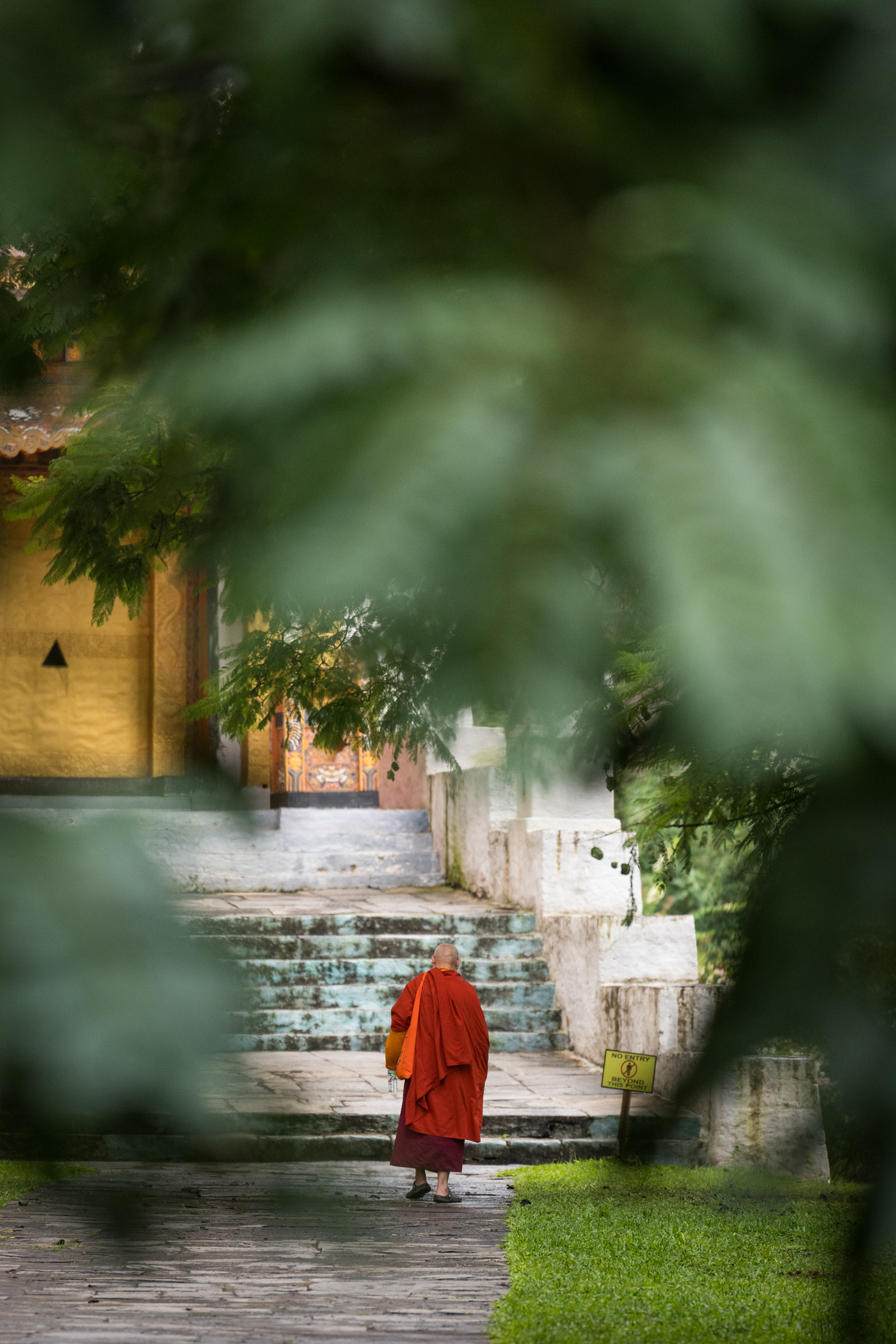

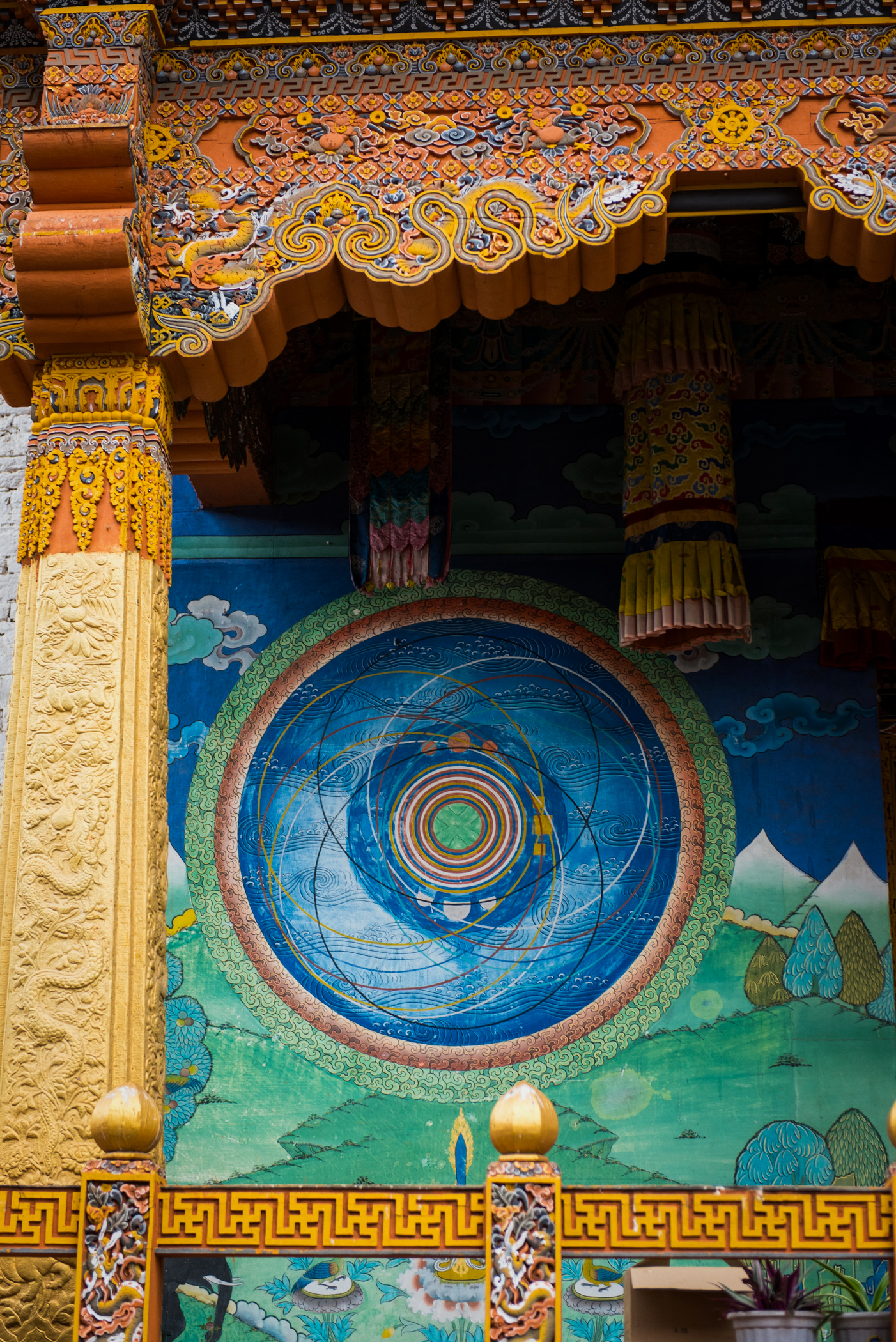

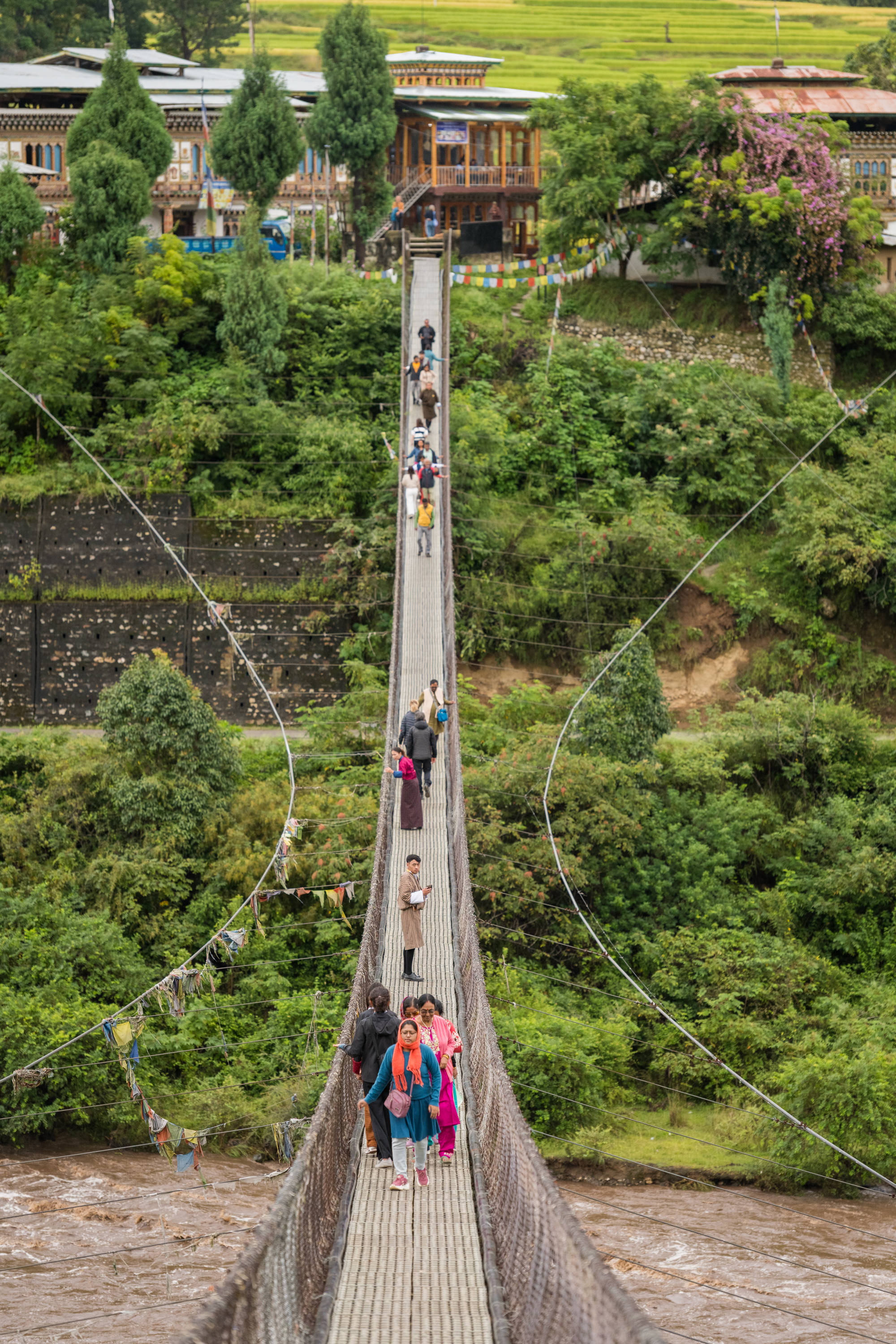
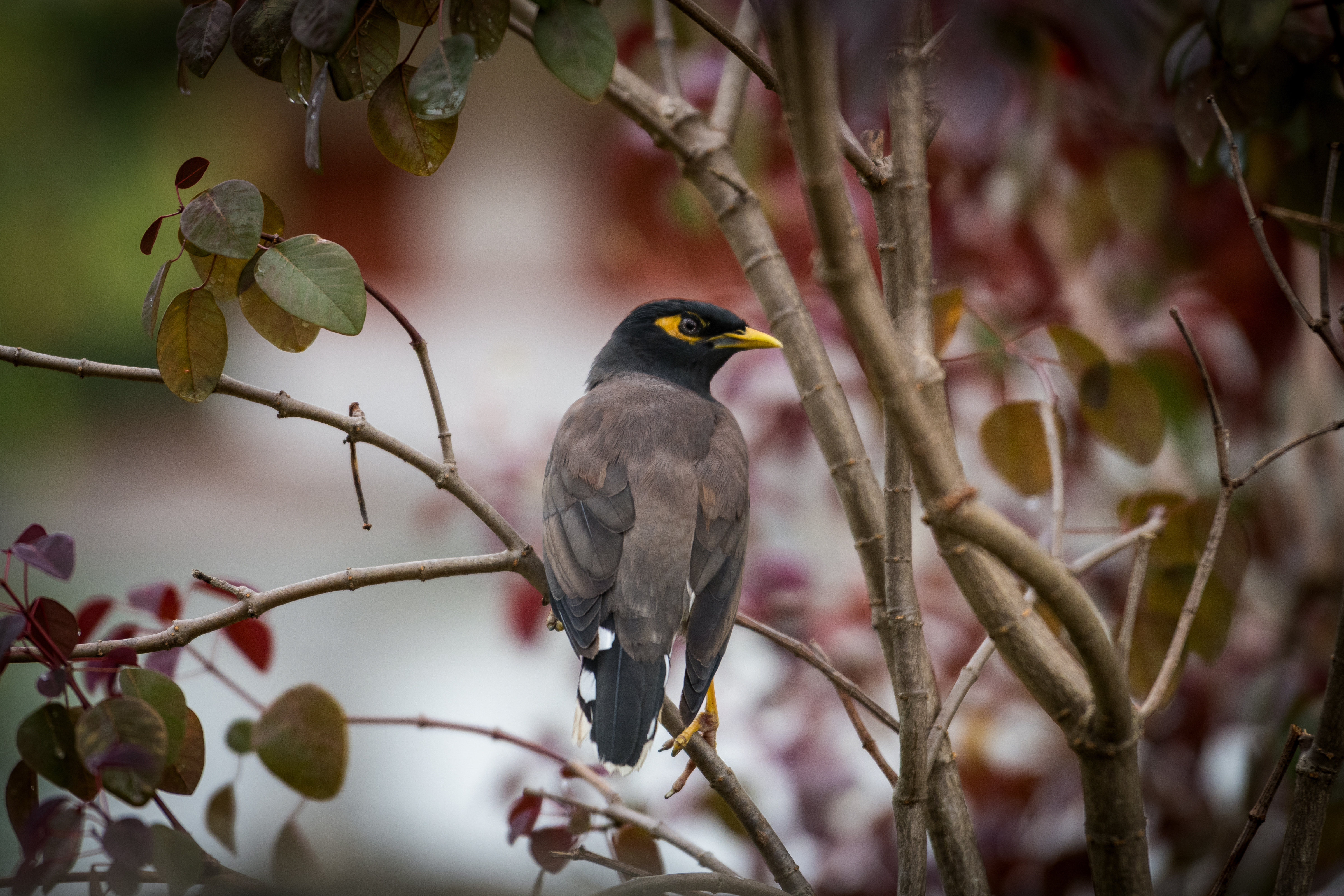
I photographed its intricate woodwork and golden roofs, sometimes framing locals in the foreground—monks, families, travelers—each figure a reminder of how faith and daily life are inseparable here. Near the Dzong, the suspension bridge swayed in the breeze, alive with footsteps. Monks in red robes, children, and visiting foreigners crossed side by side, laughter and prayer flags trailing in rhythm above the rushing water. After the storm, puddles mirrored the world—reflections of faces, robes, and rooftops rippling in soft distortion. Even the trees seemed to shimmer. In one, a lone bird waited quietly, its yellow eye catching the light as if guarding the secret of stillness itself.

That night, we stayed at Divine Heritage Lodge, a family-run guesthouse set among rice fields and mango trees. Smoke from the kitchen rose into the mist as the owners prepared ema datshi and red rice. The fire in the dining hall burned low, casting soft shadows across the room. Every movement — the serving of tea, the placement of bowls — carried that quiet grace I was beginning to recognize everywhere.
After dinner, I stepped outside. The valley lay silent except for the hum of insects and the faint sound of water moving through the paddies. A bell rang from somewhere unseen. I stood there for a long while, camera hanging loosely at my side.
That night, as the rain began again, I realized something essential: in Bhutan, devotion isn’t found only in temples. It lives in the rhythm of footsteps, in the patience of hands, in the humility of those who serve without needing to be seen.
And that, I thought, is what makes this country unlike any other.
We left the Punakha Valley early, climbing toward higher ground. The air thinned with each mile, the road tightening like a ribbon around the mountain. Mist drifted through the trees, softening the outlines of everything. In Bhutan, even the silence feels like part of the landscape — alive, waiting to be heard.
The forest opened, and suddenly the world expanded into light. Before us stretched the Phobjikha Valley, a wide glacial plain cupped between mountains, its green fields glistening after rain. Prayer flags lined the ridges in the distance, their colors faint but unbroken — blue, white, red, green, yellow — the same quiet harmony carried from valley to valley.
Here, the black-necked cranes arrive each winter from Tibet — graceful, endangered, revered. Even in their absence, you could feel them: the idea of migration, of returning, of trust.
We arrived just as the Gangtey Tshechu was beginning. Compared to the grand spectacle of Thimphu, this festival felt intimate, human — a gathering of families, monks, and neighbors, joined by shared rhythm and reverence. The courtyard was small, framed by old stone walls and prayer flags fluttering like heartbeat.
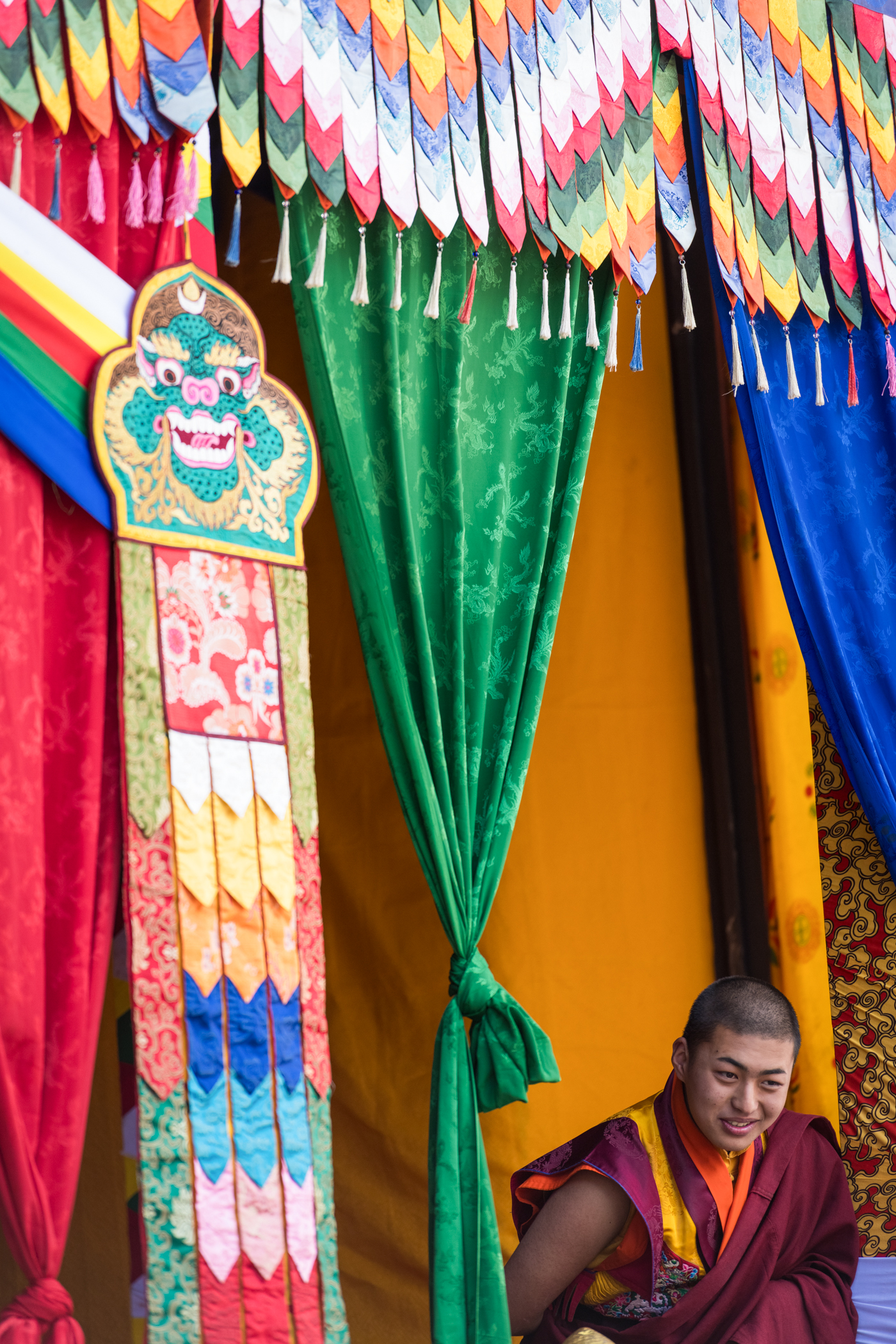
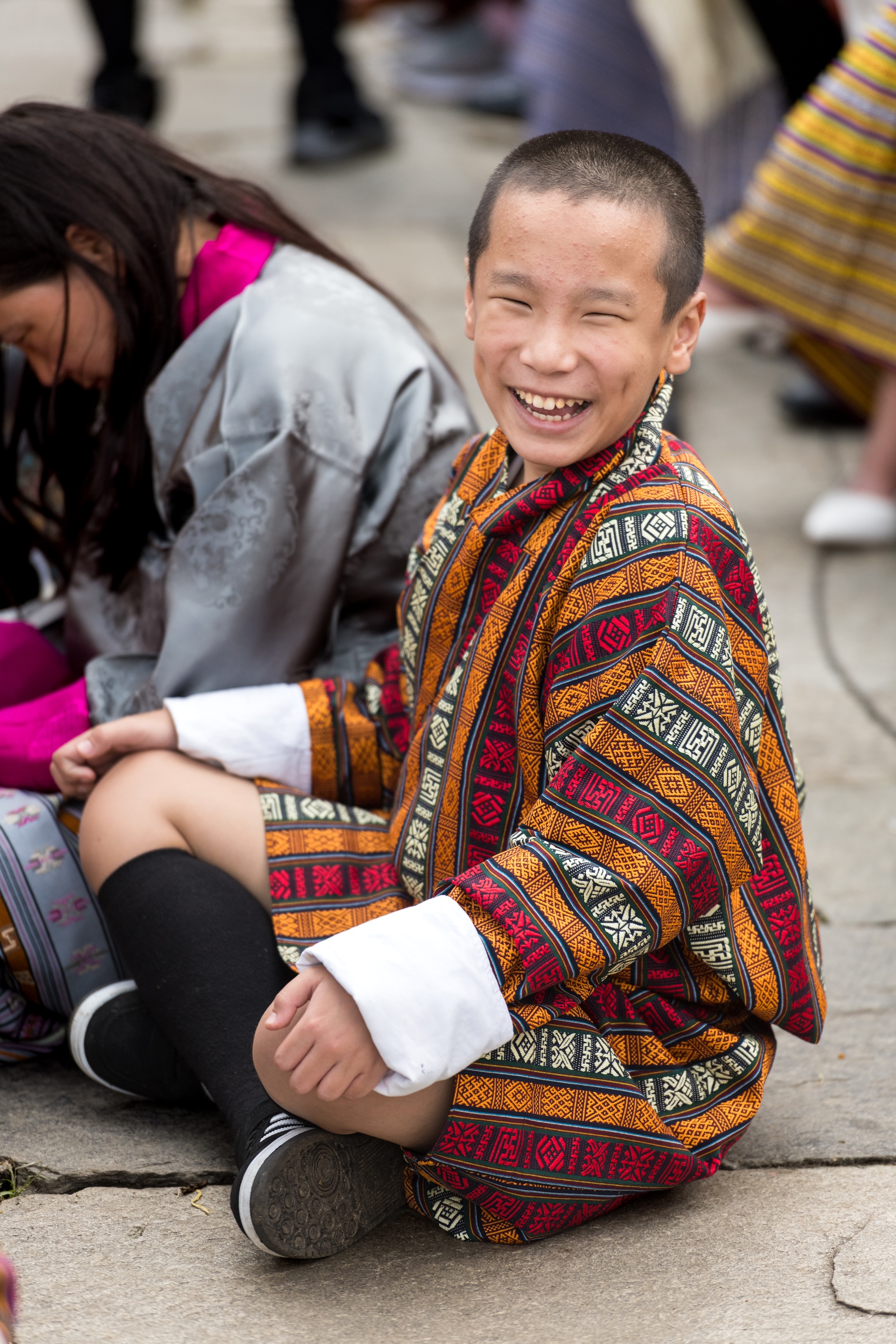

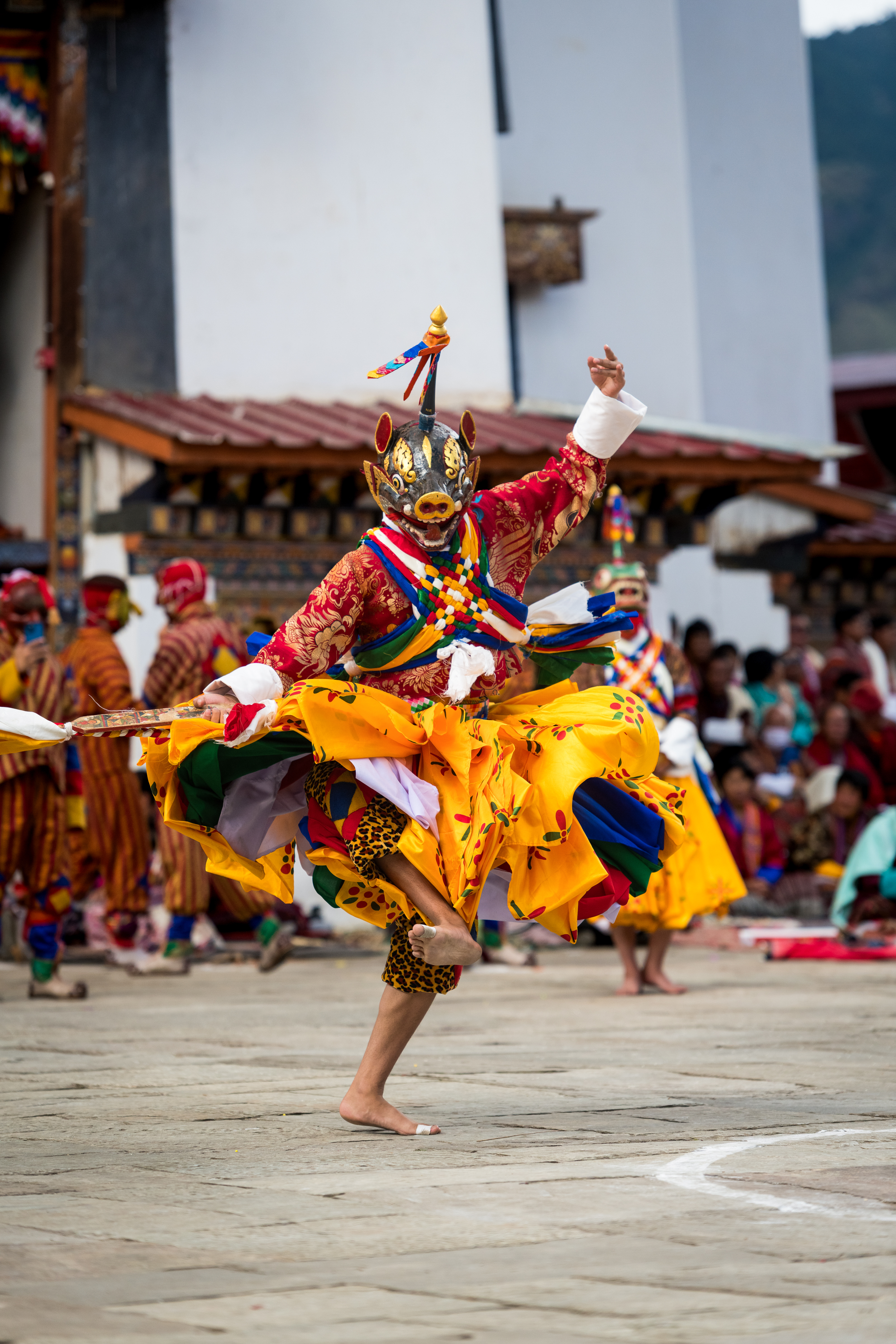
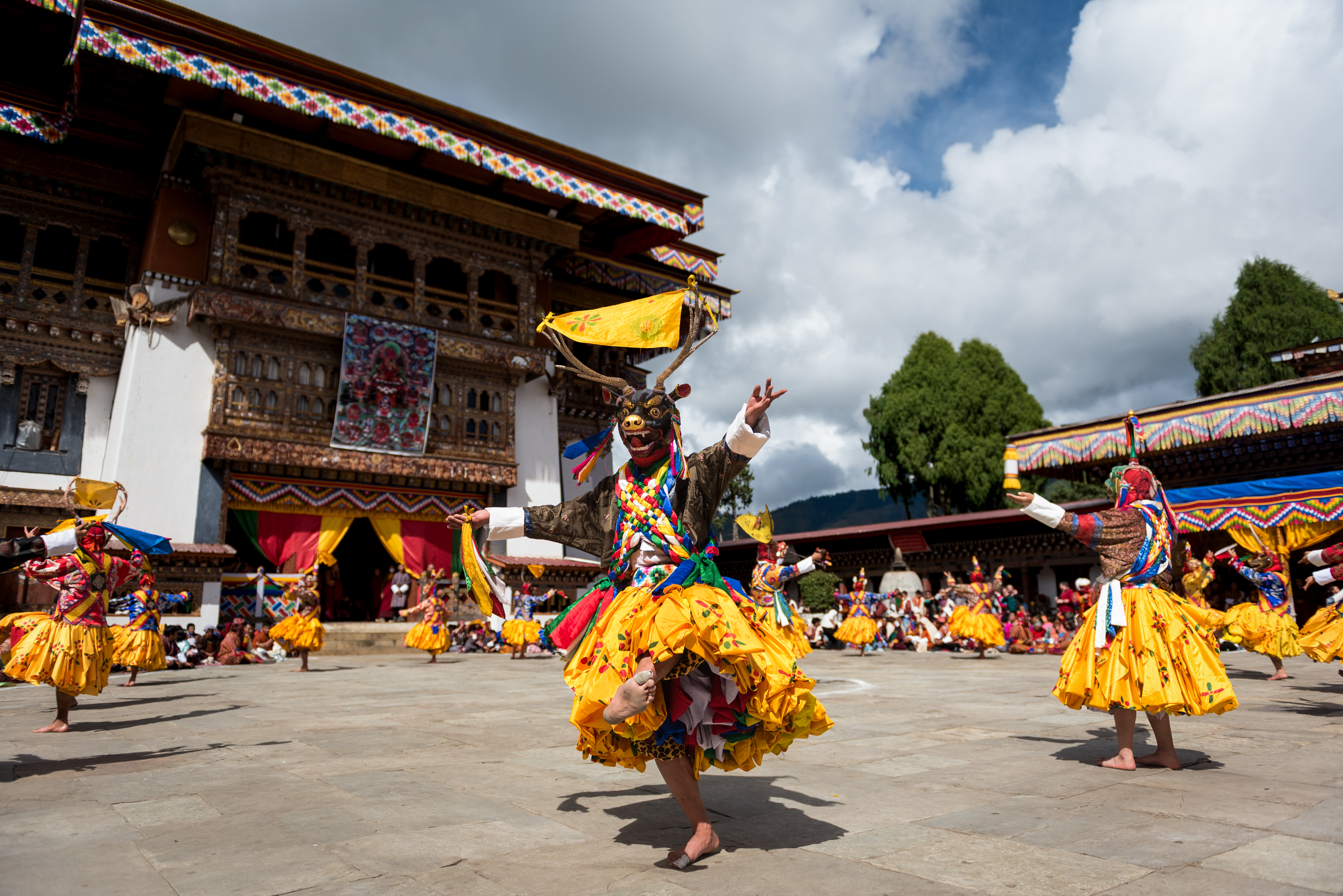
Monks in saffron and crimson robes entered the square. The drums began — deep, low, insistent. The masks gleamed with sweat and sunlight, each face both terrifying and tender. Every gesture carried intention. These weren’t performances; they were rituals that kept time itself turning.
Around me, people leaned closer to one another — mothers sheltering children beneath shawls as the rain began to fall. A woman offered me space beside her, nodding for me to sit. The rain intensified, but no one moved. The monks danced on, robes heavy, movements steady.
When it was over, the clouds parted, and a pale blue opened above us — Bhutan’s kind of blue, the kind that only appears after surrender.
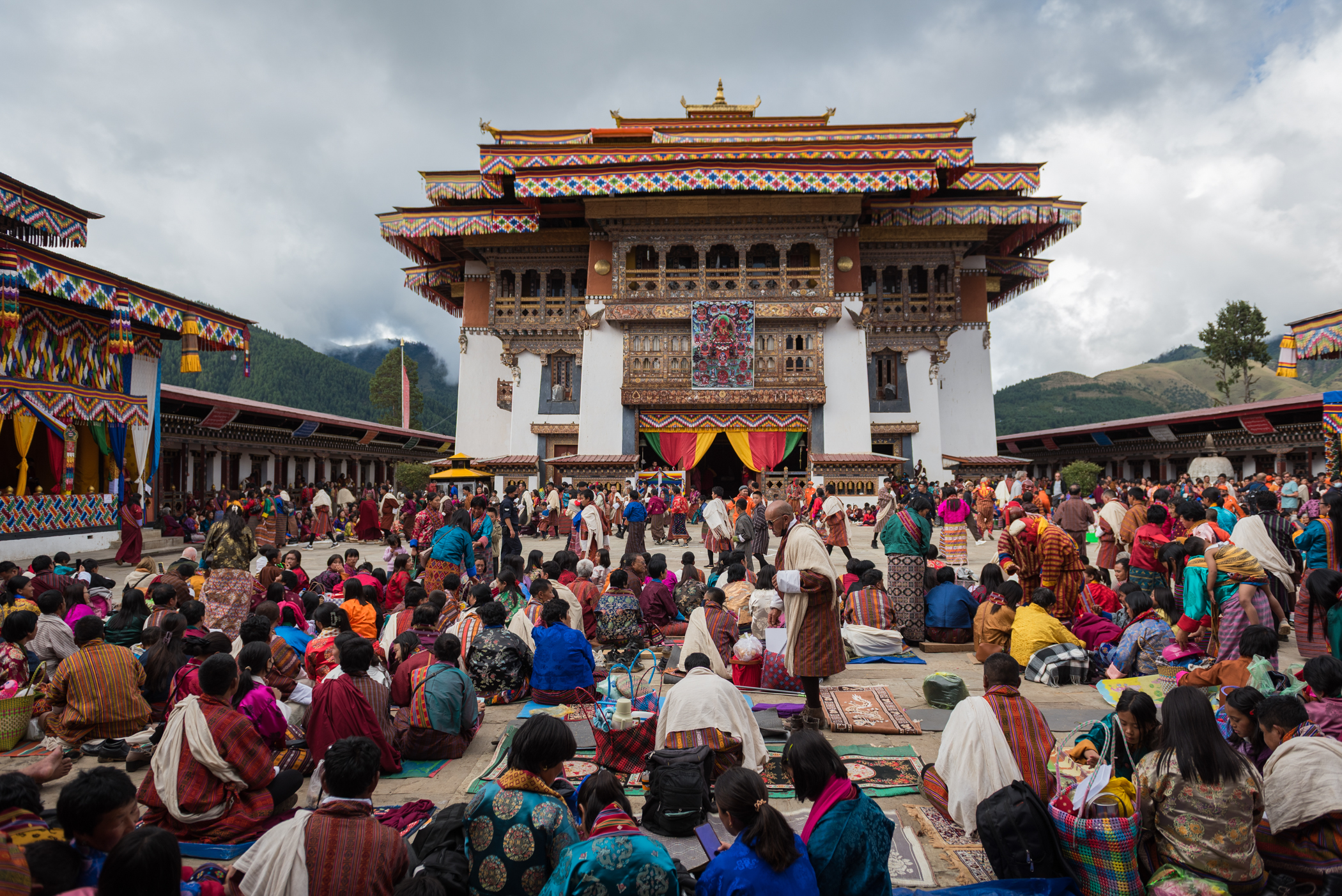
We lingered in the valley a while longer, walking through narrow paths where prayer wheels spun in the wind. The rhythm of Bhutan had already begun to reshape me — slower, quieter, truer.
From Phobjikha, we traveled west through winding mountain passes. The Lawala Pass rose and fell in a wash of green, each bend revealing a new face of the land. We stopped at Chendebji Chorten, a white-domed stupa surrounded by forest. The structure was modeled after Boudhanath in Kathmandu — its all-seeing eyes watching over travelers in silence. Prayer wheels lined its perimeter, each one turning with the weight of someone’s hope.
Farther along, a small café appeared beside a waterfall — just a wooden porch, a kettle steaming on the stove, the sound of water louder than the conversation. I remember thinking: this is service too — the making of tea for whoever passes by.
By evening, we arrived in Bumthang, the spiritual heart of Bhutan. The valley spread wide and golden beneath a lowering sky. Fields of barley, apple trees, and old monasteries stretched across the plain like memory made visible.
We stayed at the Swiss Guest House — a place that felt suspended in time. Built over four decades ago, it was the first guesthouse in Bumthang, once the residence of Karsumphe Angye, the elder sister of Bhutan’s first king. Later, a Swiss dairy farmer named Fritz arrived after seeing a small advertisement placed by the Bhutanese government in a Swiss newspaper: Wanted — a cheesemaker for Bhutan.
He came, stayed, and built a quiet legacy — starting a small cheese factory and microbrewery that still operates today, now run by his family. In the evenings, they serve simple Swiss specialties — fondue, muesli, and cheese that tastes like it was made with patience itself.
The rooms were built from local wood, warm and deeply comforting. Three German shepherds wandered the property like gentle sentinels, keeping watch without demand. A cat lounged in the courtyard, appearing wherever the sun pooled. Outside, flower gardens framed by low stone walls glistened after rain, and inside, a fire burned quietly, throwing soft light across carved beams.
Dinner was perfect — red rice, fresh vegetables, local cheese, and beer brewed on-site. After weeks of travel, the comfort felt earned, not indulgent — a reminder that real service is about awareness. Every movement of the staff, every gesture of care, carried intention. Plates arrived without haste, tea poured without sound. Nothing forced, nothing forgotten. It was hospitality distilled to its essence — grace through presence.
That night, I slept with the window open to the sound of rain and the faint hum of crickets, thinking how places like this remind you that service, at its highest form, is an act of love — not performance, but presence.
If you’re lucky enough to meet Fritz, you’ll see that same spirit reflected in his eyes — the quiet pride of someone who came to build something small, and ended up helping shape a legacy.
The next morning, Tshering arranged something unexpected. “There’s a school nearby,” he said. “It’s not on our plan, but I think you’ll like it.”
In my photography work, I often collaborate with nonprofit organizations that focus on education — a cause I’ve chosen to dedicate my heart and lens to. I’d mentioned this to my guides earlier in the trip, and because Beyond the Clouds truly listens, it was no surprise that they quietly made it happen. It’s small gestures like this that reveal their difference — thoughtful, intuitive, and deeply human.
We arrived midmorning, the light soft and forgiving. The school was perched on a hill, surrounded by yellow wildflowers and fields that seemed to hum with life. Children ran across the courtyard in uniforms of maroon and blue, laughter echoing like music.
I photographed as they learned and played, but mostly, I watched. A girl paused near the doorway, clutching a small notebook. When I smiled, she smiled back — a small, knowing exchange that said more than any portrait could.
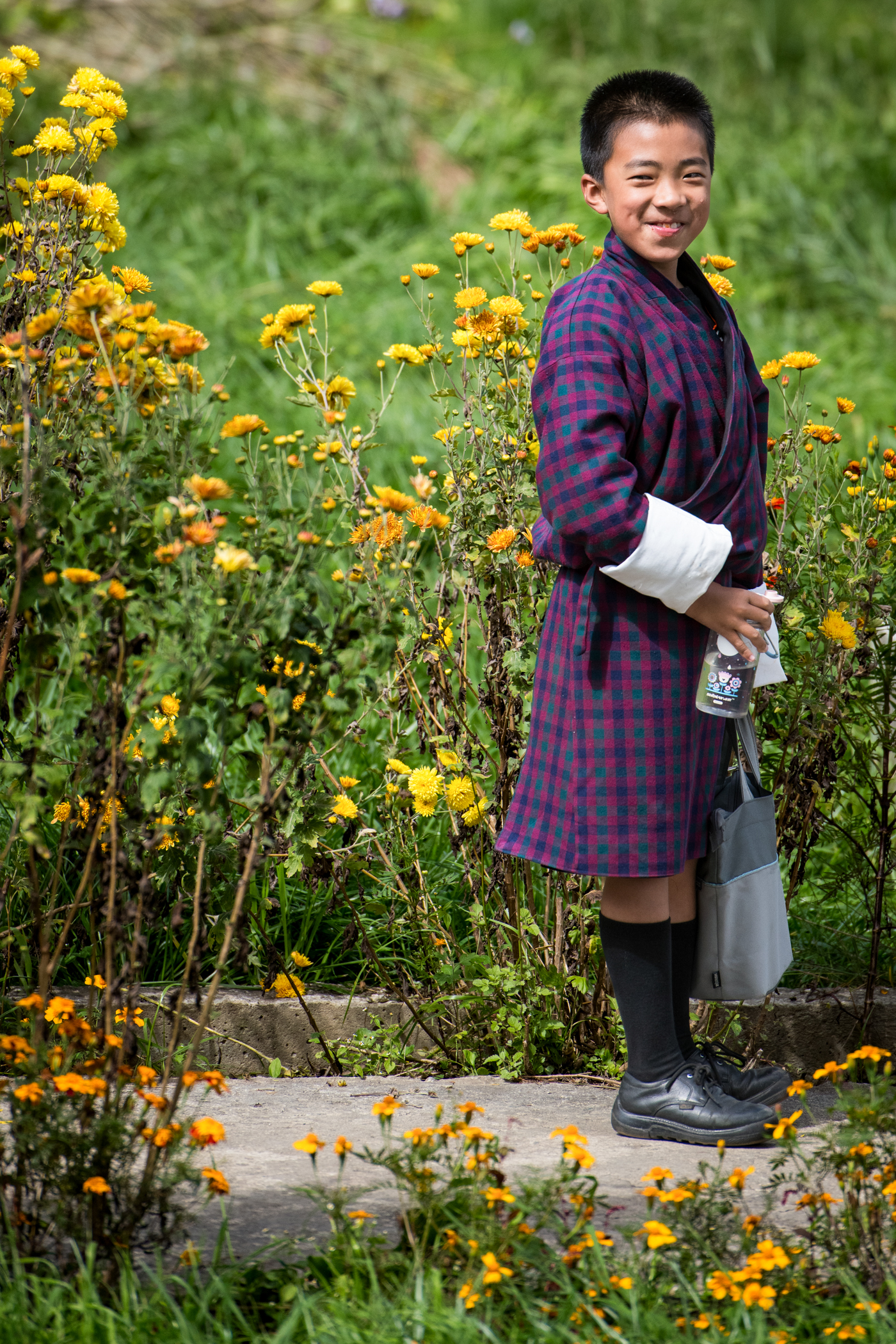

It wasn’t about capturing. It was about seeing. About giving attention, which, I’ve come to believe, is the purest form of service.
As we left, the children ran beside the car, waving until the road turned and they disappeared into the green.
That afternoon, Tshering led us to a courtyard behind an old monastery. There, a group of students from the Royal Academy of Performing Arts practiced traditional Cham dances — a rehearsal few outsiders ever witness.
The instructor stood in the center, his voice low but firm, demonstrating each movement while the students mirrored him, step by step. Their bare feet struck the cool stone with rhythm and purpose. You could feel centuries of tradition passing through them — one gesture at a time.
I photographed quietly, the click of my camera barely audible beneath the sound of feet and breath. It wasn’t performance. It was inheritance — devotion taught through repetition, service disguised as art.
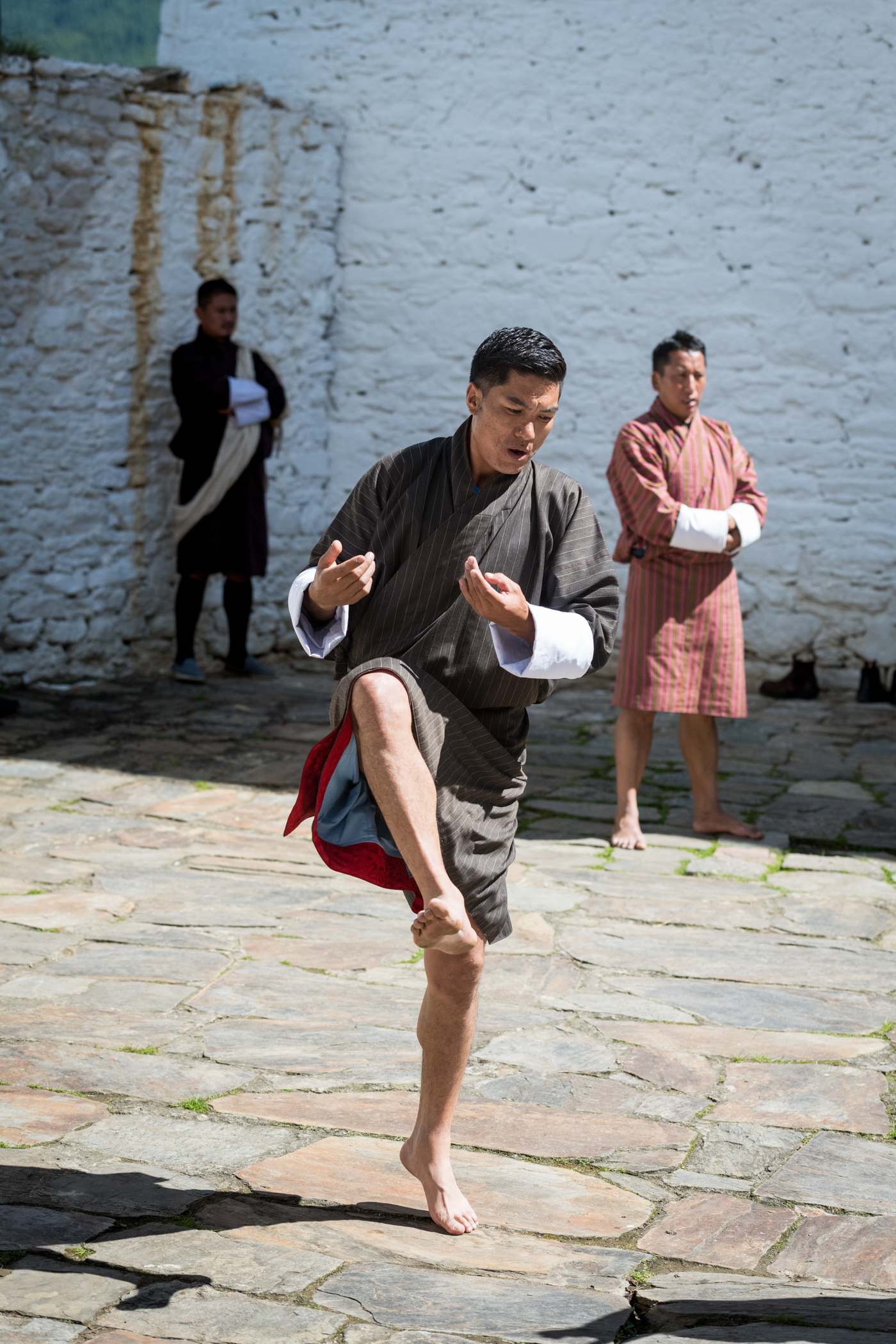
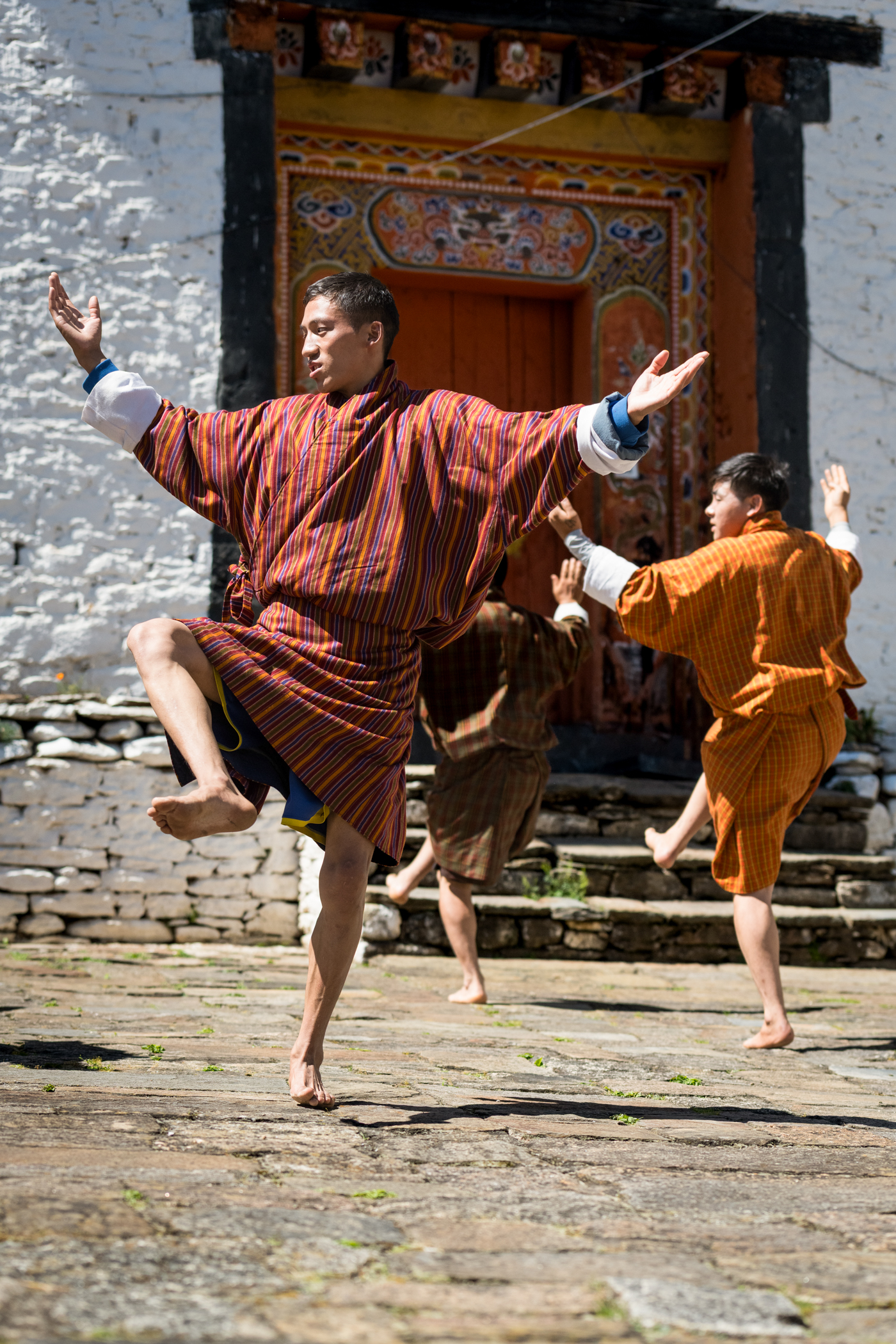
As evening came, we drove through the countryside, windows down, the scent of pine and earth filling the car. The light softened to gold. Sonam turned on the radio, and through the static came Alan Jackson’s “The Older I Get.”
At first, it played softly, almost by accident. Then Tshering smiled, humming along, his voice low but sure. Sonam joined him, laughing when he missed a line. The song drifted out the window into the valley — English words carried by Bhutanese voices, blending into the landscape like they belonged there all along.
I sat in the back seat, listening. The song spoke of age and gratitude, of learning to appreciate what remains. The road curved through the hills, and I thought about the long arc of my own journey — from kitchens and classrooms to these mountains halfway across the world. Thirty years of photography, and somehow I was still learning what it meant to truly see.
Maybe this was it — the heart of service. Not the grand gesture, but the quiet act of joining the song.
Tshering looked at me through the rearview mirror. “You like this one?” he asked.
I nodded. “Yeah. More than you know.”
He smiled. “Good,” he said. “We’ll play it again tomorrow.”
We laughed, and the three of us — a guide, a driver, and a photographer — sang our way through the heart of Bhutan.
I didn’t think I’d be back in this part of the world so soon. The Himalayas have a way of calling you when you’re ready to listen—never before. From the small plane lifting out of Bumthang, the peaks rose through the clouds like a procession of giants. Tshering was beside me, his hands folded loosely in his lap, calm as always. The aircraft tilted sharply between ridges, following the thin line of the river far below. Outside, light spilled across the mountains, and for a long time neither of us spoke.
When we landed, Paro felt like an exhale—wide, golden, and still. Hours later, Sonam arrived, his face bright with joy, his eyes full of recognition. He had driven through the night to meet us, yet there was no weariness—only warmth. The three of us stood together again, laughter rising easily between us, the kind that comes from shared roads and the quiet knowing of friendship.
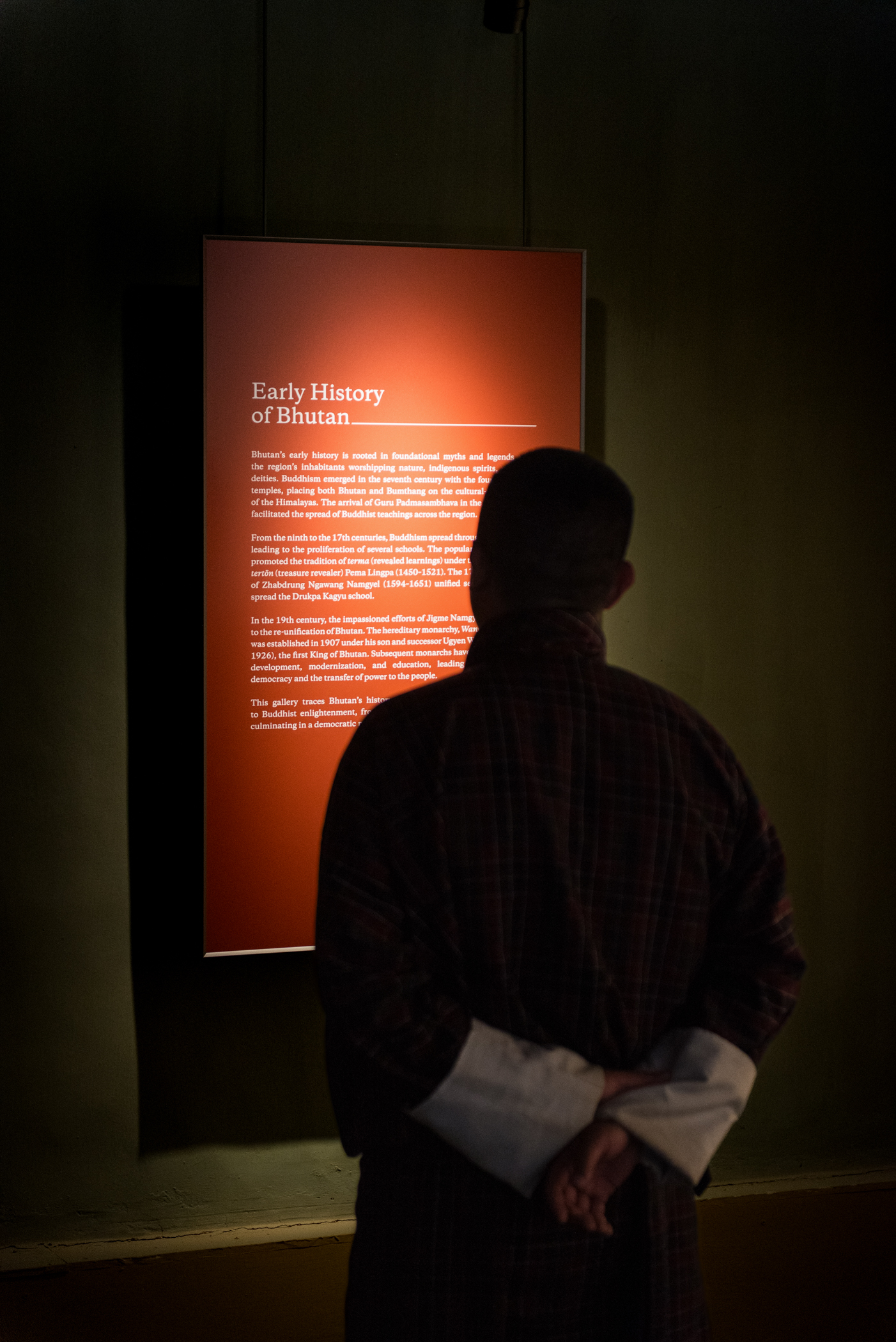

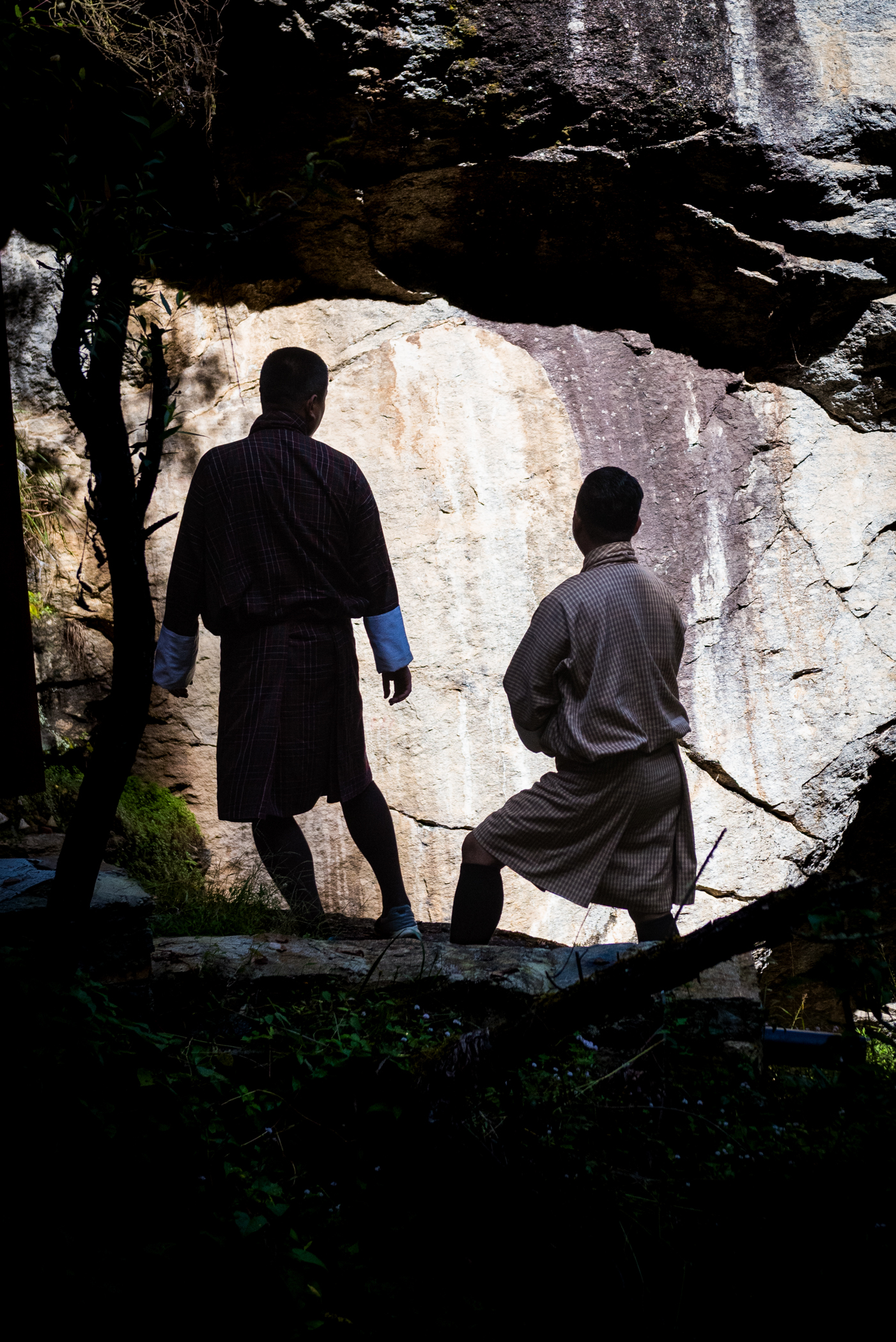
That afternoon, before the great climb, Tshering said there was somewhere he wanted to take me. We drove to Kyichu Lhakhang, one of Bhutan’s oldest temples, said to have been built in the seventh century. The courtyard was alive with color—fresh paint, marigolds, and a single orange tree heavy with fruit. At this altitude, it seemed improbable, but the branches were full, shining against the soft light of the valley.
Tshering told me the story as we walked closer. He said that long ago, people believed this tree was blessed. It never stopped bearing fruit, not even in winter. The myth said that if an orange fell while you were standing beneath it, whoever picked it up would receive good luck and health. “But,” he added, “you cannot pick the fruit. It must fall for you—the tree must give it.”
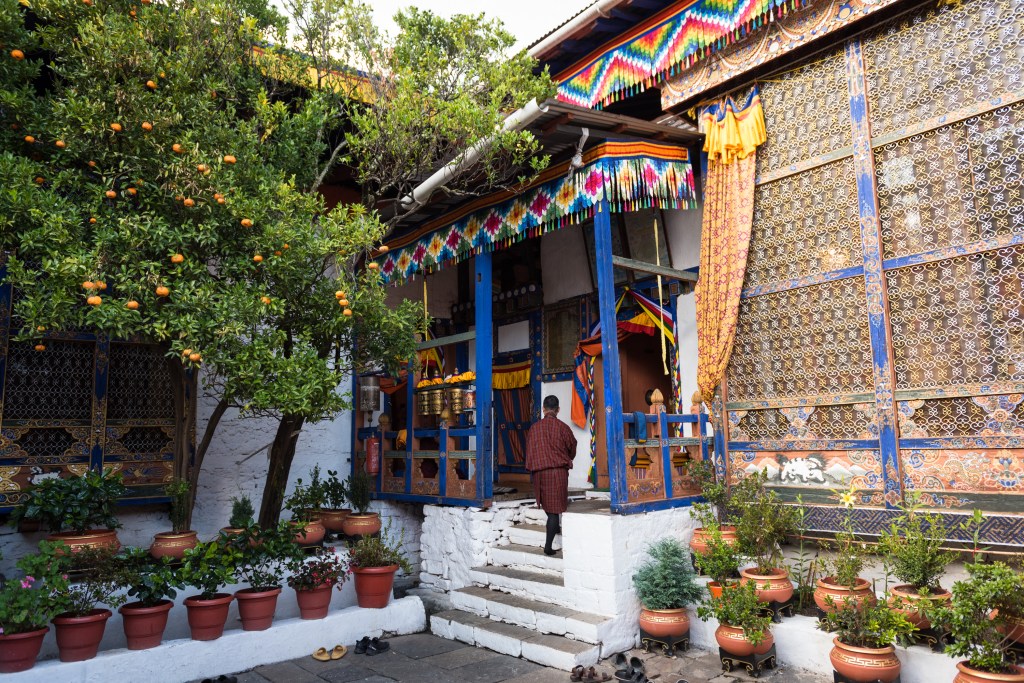
We stood quietly for a moment, the branches above us trembling slightly in the wind. Then, as if cued by his words, an orange broke free, falling softly and rolling to a stop at Tshering’s feet. He looked at it for a second, then at me, half smiling, half amazed. He bent, picked it up, and held it out. “You should take it,” he said. “It fell while you were here.”
I shook my head. “No,” I said gently. “It found you. Keep it—for your family, for your health. Some blessings know exactly where to land.”
He hesitated, then nodded slowly, understanding. He turned the orange in his hands, almost reverently, then rubbed it carefully on his gho as if polishing a small treasure. His eyes softened, full of quiet pride. “Then I’ll take your wish with it,” he said. And he tucked it into the fold at his chest, holding it close as though the moment itself had weight.
Watching him, I thought about service—how it moves in circles. How sometimes giving is the only way to keep what matters. We serve each other in the ways we can: through stories, through care, through belief passed forward. The orange was no longer fruit or fable. It had become a bridge—between age and youth, between giving and receiving, between two people meeting exactly halfway.

The next morning, I woke before dawn. The day had come—the climb that had shadowed every conversation since the trip began. Tiger’s Nest, or Taktshang Goemba, isn’t just another monastery. It’s a legend pressed into rock. Every traveler I’d met along the way spoke of it with a mixture of awe and doubt: Will you make it? Can you? The questions weren’t about distance. They were about devotion.
The story goes that in the 8th century, Guru Rinpoche, the saint who brought Buddhism to Bhutan, flew here from Tibet on the back of a tigress to meditate and subdue the demons that haunted these valleys. He spent three years, three months, three weeks, three days, and three hours in the cave that now forms the heart of the monastery. For centuries, pilgrims have followed his path—some barefoot, some crawling, all climbing in faith.
The trail began gently, rising through dust and pine needles, but soon tilted into the steep rhythm of effort. Around me, travelers of every age and country found their own pace. A grandmother in bright kira climbed slowly, leaning on a stick. A young couple carried water for strangers. A man from Spain passed me, laughing breathlessly, “We all find our religion on this hill.”
Somewhere along the way, we stopped being strangers.
When one person stumbled, others reached out. When someone paused to rest, the rest waited. It wasn’t competition—it was communion. We encouraged each other with nods, hands, and breath. Each step higher felt like a shared victory.
At the halfway point, the monastery appeared across the gorge—white walls clinging to the cliff, gold spires catching the light. No one spoke. It was the kind of beauty that silences you, the kind that rearranges what you think you know about balance. The final stretch was steep, carved into stone, with waterfalls dropping in veils beside us. My heart pounded from altitude and awe.
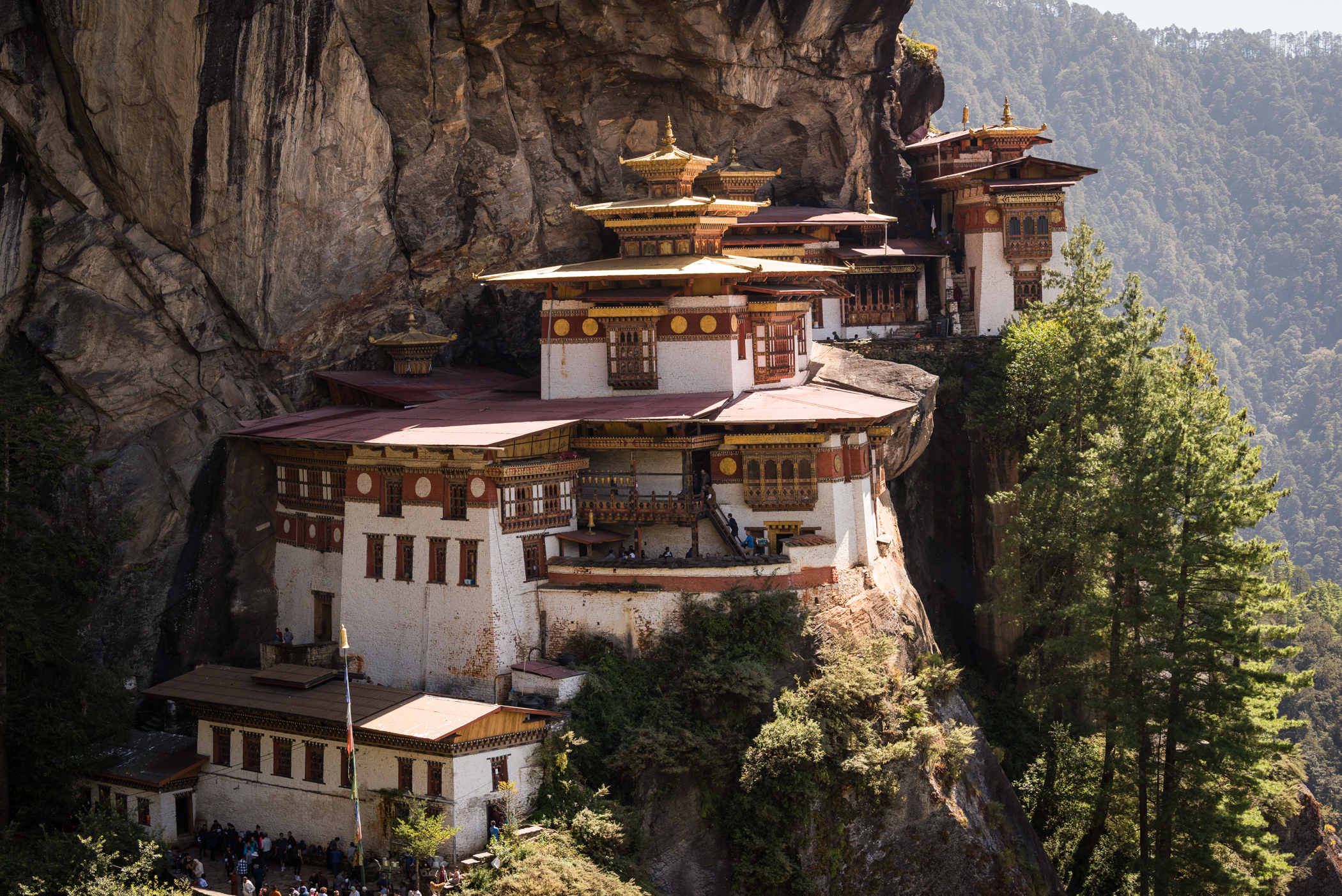
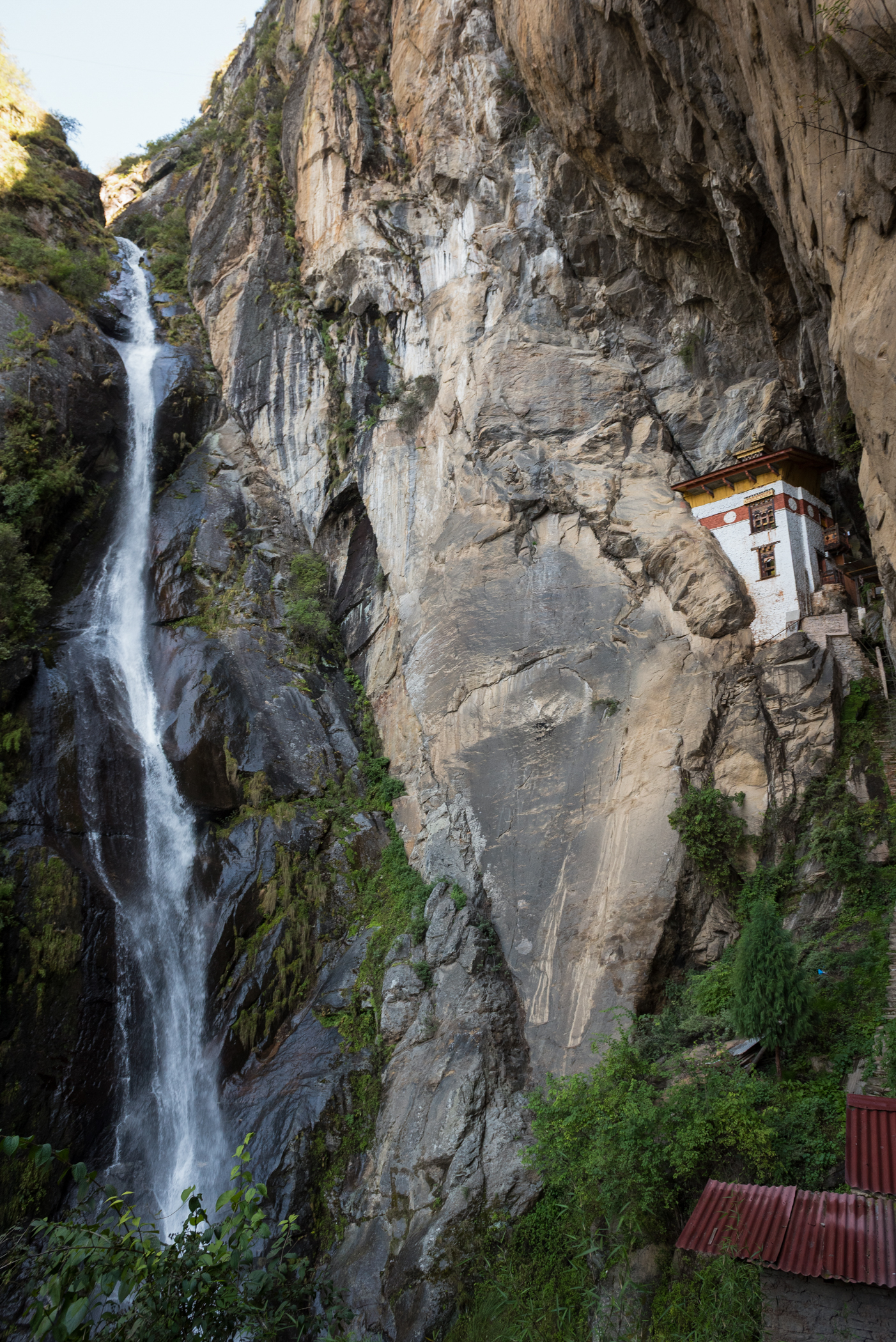
And then, finally, we arrived. The monastery stood as if the mountain itself had decided to grow a heart. Inside, the air was cool and dark, filled with the scent of age and devotion. Monks moved quietly through narrow passages, their robes brushing stone. Somewhere deep inside the cliff, a single drum beat in rhythm with my pulse. I had made it—but not alone.
The way down was no easier. Knees trembled. Legs burned. The same strangers who had cheered me up now called encouragement to those still climbing, clapping, laughing, waiting at corners. The pilgrimage never ends at the top—it turns back on itself, becomes service again. One group going up, the other coming down, each helping the other find their breath.
At the bottom, I turned back for one last look. The monastery glowed against the cliff, steady as sunrise. I’d marked it off my list, yes—but the truth was simpler: I’d done it because others believed I could.
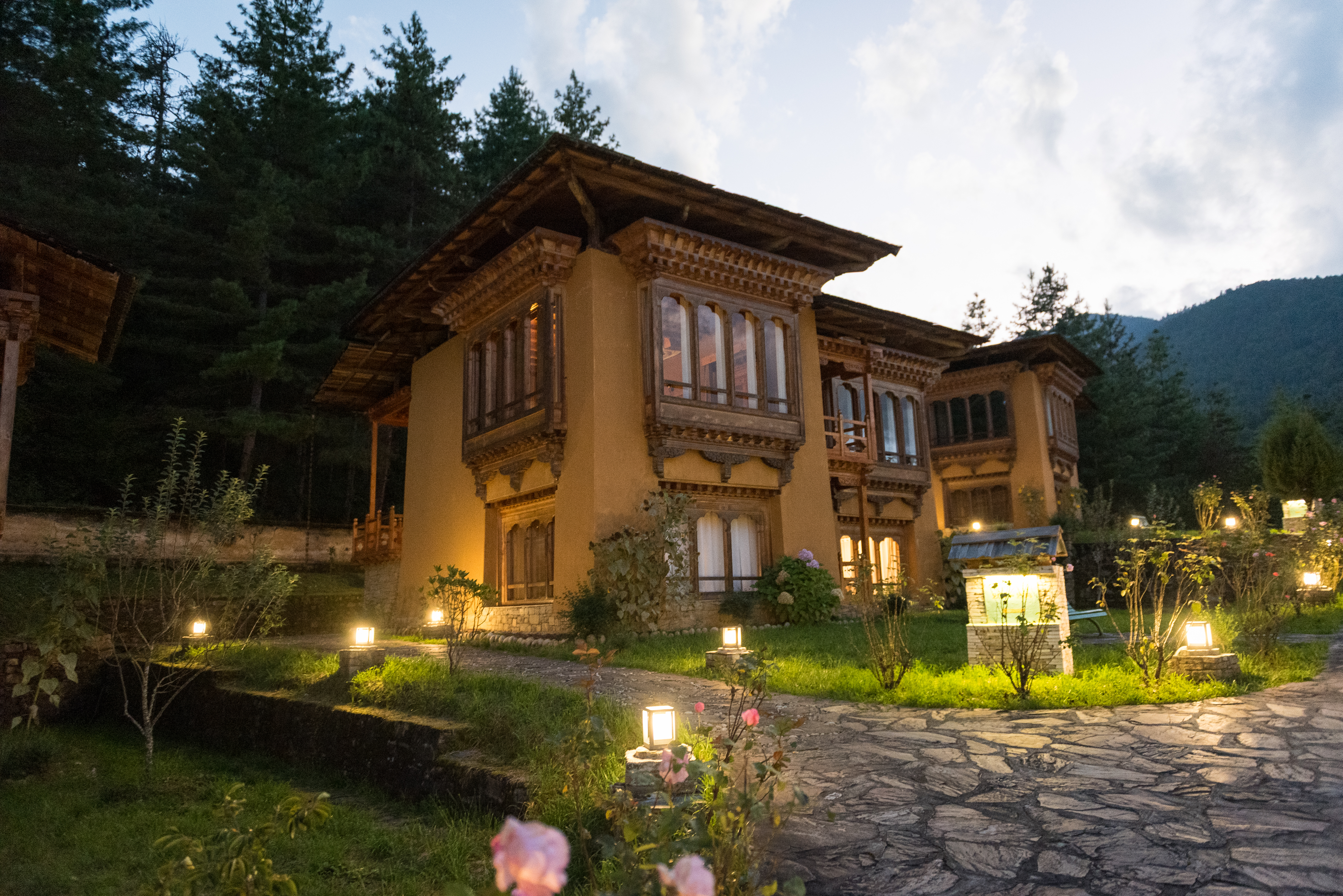
I spent the last two nights at Naksel Boutique Hotel & Spa in Paro — and it felt as though they’d saved the best for last. From my room and the attached balcony, I could see Tiger’s Nest itself, clinging to the cliffs like a secret. Close enough to the airport, I could watch Bhutan’s pilots — heroes of the Himalayas — guiding their planes through the narrow valley with precision and grace.
Naksel, set among forests in Ngoba Village, is built in perfect harmony with its surroundings — handcrafted stone walls, carved wooden beams, and wide windows that open to sweeping views of the Paro Valley. It’s Bhutanese design at its finest: rooted in tradition, yet quietly modern.
After the long hike to Tiger’s Nest, I visited the Menchu Himalayan Herbal Spa, where every treatment felt both physical and spiritual — a restoration of energy and calm. The experience was less about indulgence and more about awareness; every movement, every word from the staff carried the same intention I’d felt across Bhutan — genuine care, offered with pride.
Naksel wasn’t simply a place to rest. It was a reflection of everything Bhutan stands for: balance, grace, and the beauty of being fully present.
The next morning came quietly. The car was immaculate, as always—fresh water lined neatly in the holders. Sonam and Tshering arrived together to pick me up, just as they had so many mornings before. We drove through the still valley toward Paro Airport, the world outside just beginning to wake. None of us said much. The silence felt full, like the pause between verses of a song that none of us wanted to end.
At the terminal, we stood together in the gray dawn. In Bhutan, farewells are gestures more than words—palms pressed together, a small bow, a quiet acknowledgment of connection. We did that first, out of instinct and respect. Then something unspoken moved between us, and all three of us stepped forward and hugged.
It was brief, but the moment felt enormous—three men, from three different lives, holding gratitude between them. In Bhutan, such affection is almost unseen. Yet in that instant, it felt as natural as breathing. The hug said everything we couldn’t find words for: respect, friendship, faith in what we’d shared.
When we finally pulled apart, there were no goodbyes. Just smiles—steady, knowing, unguarded. Somewhere behind us, a bird called out, sharp and clear against the soft morning air.
As I walked toward the gate, I thought of a line from Alan Jackson that had played in the car more than once on our long Bhutanese drives:
The older I get, the more thankful I feel—
For the life I’ve had, and all the life I’m living still.
When the plane lifted through the valley, I looked out the window at the first light brushing the peaks gold. Somewhere below, there would be an orange tucked safely in a pocket, kept like a treasure—an unspoken reminder of kindness paid forward.
I thought of all the colors this country had revealed—blue for patience, green for harmony, white for grace, orange for purpose, black for reflection, silver for gratitude.
Bhutan wasn’t a place I passed through. It was a teacher. And its final lesson was this: sometimes the most generous act of service is to believe someone else deserves the blessing more than you do.
****************************************************************************
✦ Join Me in Bhutan ✦
For more than three decades, I’ve chased light across the world — from crowded city streets to silent mountain temples — trying to understand what makes an image truly alive. I’ve come to believe it isn’t the gear or even the craft. It’s attention. It’s love.
Now, I’m inviting you to Bhutan — the last Himalayan kingdom, where attention becomes art and service is a way of being. It’s a place where rivers speak in silver, prayer flags turn wind into color, and grace is woven into the rhythm of daily life. Yet even here, change hums quietly at the edges.
Technology, tourism, and time are finding their way into the folds of tradition. To visit Bhutan now is to witness a world still guided by heart before it bends to hurry — to see a culture holding the line between ancient wisdom and the modern world.
This journey is more than a photography tour — it’s a pilgrimage for the eyes and the soul. Whether you shoot with an iPhone, film, or digital camera, this experience will deepen how you see — and how you feel. I’ll be guiding you through the art of patience, presence, and storytelling through light — lessons drawn from over thirty years as a photographer, author, and teacher.
I’ve spent the entire year of 2025 curating this experience — walking the trails, meeting the people, and staying in the places that move the spirit. After a month-long scouting trip across Bhutan, I’ve chosen the very best guides, festivals, and lodges to create something rare: a world-class itinerary built on connection and meaning. Every detail has been considered. Every moment has purpose.
Bhutan remains a land untouched by haste, protected by intention. A modest daily visa contribution helps ensure it stays that way — attracting travelers who seek more than destinations, who seek transformation.
Come with me. Let’s climb toward Tiger’s Nest, watch the mist rise over Punakha, and rediscover what it means to be fully alive. You don’t need to be a professional — only curious, open, and willing to be changed.
Because some journeys don’t just change what you see —
they change who you are.
BOOK HERE →
Early-bird specials available.
Perfect for the holidays — a gift for yourself, or for someone you love who deserves to see the world differently.
Bhutan isn’t just a destination.
It’s a transformation that lasts a lifetime.
 artstyleflow.com